Silicon Fen: Cambridge tech cluster guide
Silicon Fen explained with numbers: history, companies, science parks, investors and the growth pains of the Cambridge technology cluster.
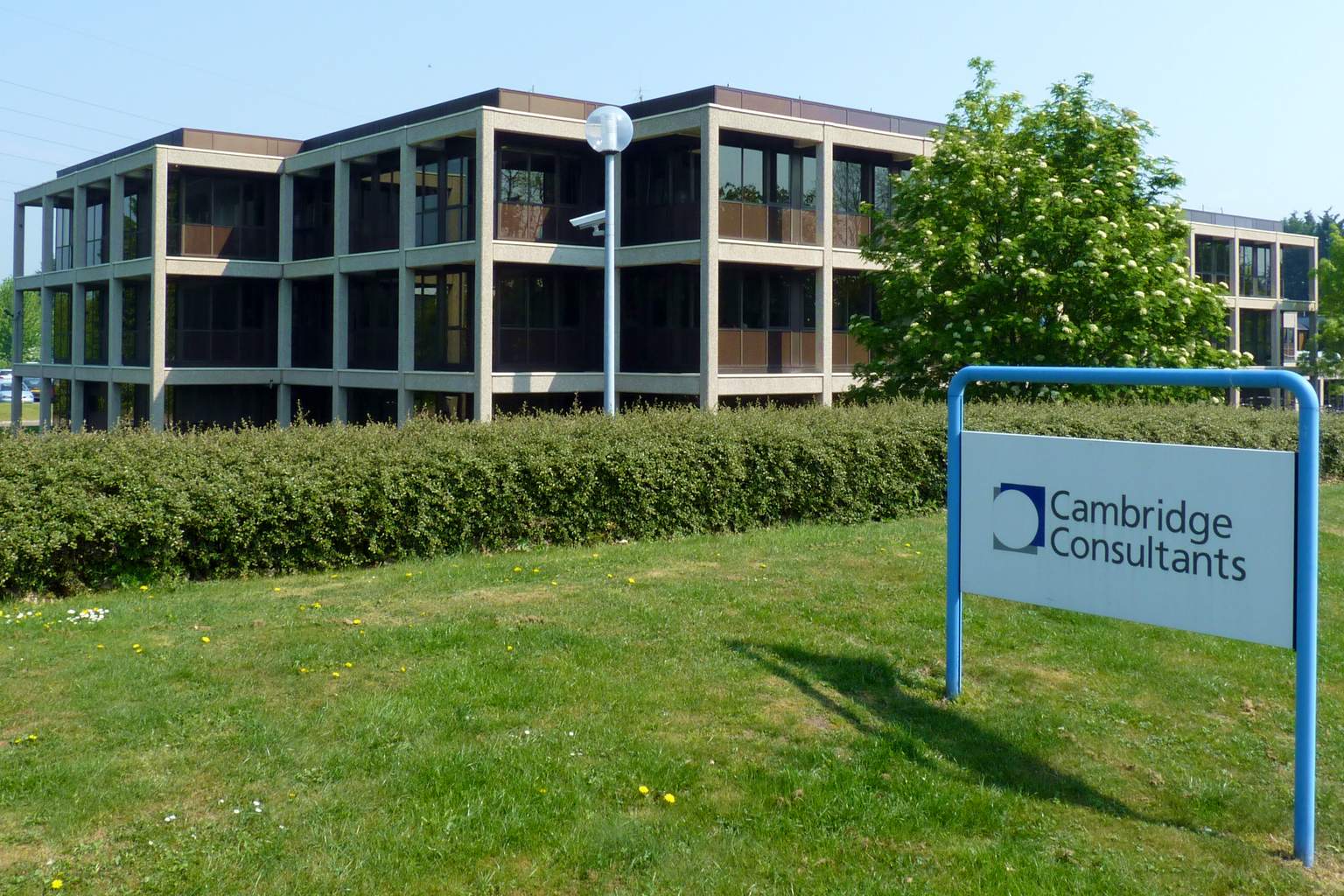
Cambridge Consultants on Cambridge Science Park. Photo: Cmglee, via Wikimedia Commons (CC BY-SA 3.0).
Silicon Fen is the working name of the technology cluster in and around Cambridge, England: a concentration of science and technology companies that grew out of the university and its colleges. Cambridge Ahead, the business and academic group that tracks the cluster with an annual census of company accounts, counts 25,872 companies with a combined turnover of £53 billion and 220,951 employees across its company data, and lists 26 companies with valuations above $1 billion. Its cluster map covers firms within a 20-mile radius of the city centre.
What Silicon Fen is
Silicon Fen is not an administrative area and has no official boundary. In practice the name covers Cambridge itself plus a belt of science parks and campuses in South Cambridgeshire: to the north around Milton Road and the guided busway, to the south around Addenbrooke's Hospital, and to the west along the A428. The datasets that measure it use a 20-mile radius around the city centre and separate Cambridge-based firms from firms that are merely active in the area.
Three numbers set the scale. The Cambridge Ahead dashboard records 25,872 companies, £53 billion of turnover and 220,951 employees in its company data, with 26 companies valued above $1 billion. A separate study of business parks and clusters in the city region, published in October 2025, found more than 150 such locations holding more than 4,000 companies and 100,000 jobs in the 2023-24 financial year, with life sciences leading the growth. Growth has been fast for years: corporate employment in Greater Cambridge rose by 4.5 per cent a year between 2018 and 2024, led by knowledge-intensive sectors at 6.2 per cent a year, according to Centre for Business Research analysis published in March 2025.
How it started
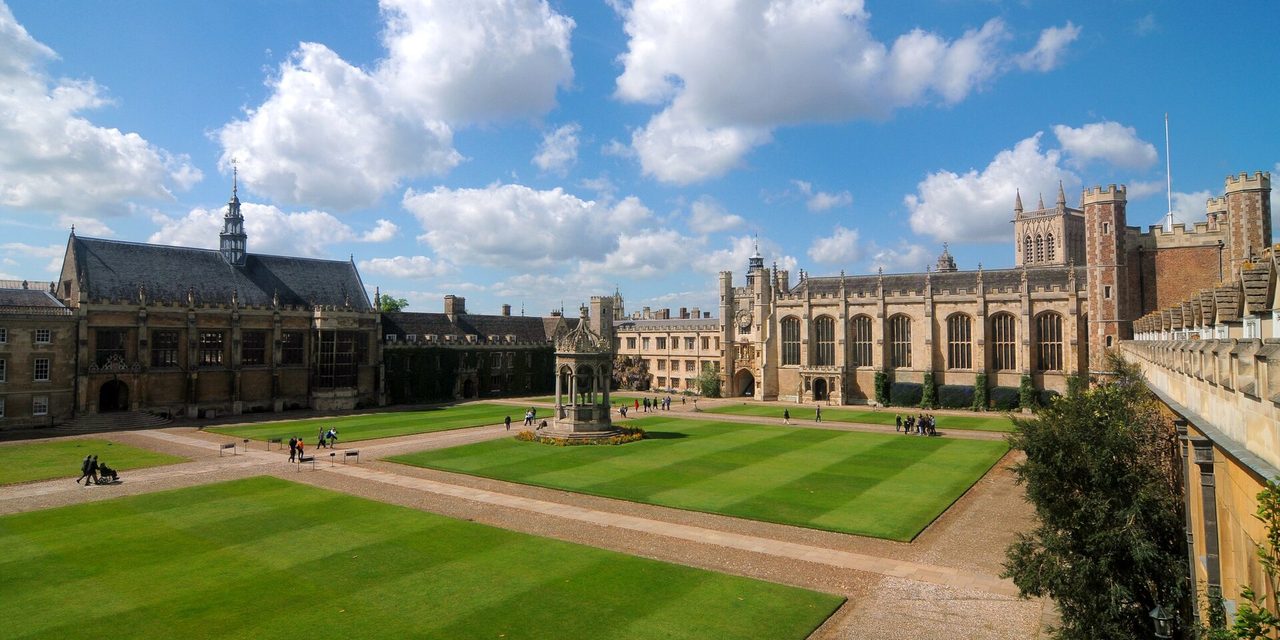
The label for all of this, the Cambridge Phenomenon, was coined by Peta Levi in a Financial Times article in November 1980. The roots go back further. At the end of the 1960s Sir Nevill Mott, then head of the Cavendish Laboratory, reported to the university on relations between the university and science-based industry. Following that report, Trinity College decided in 1970 to develop part of its land as the Cambridge Science Park, and the first companies moved in during 1973.
Commercial science in Cambridge predates the park. Cambridge Consultants was founded in 1960 by Cambridge graduates to put university brains at the disposal of industry, and it was the first occupier of purpose-built premises on the Science Park. The park itself came from a concrete proposal: Trinity's bursar John Bradfield set aside 50 hectares of college property, responding to Mott's call for the university to help create 2,000 local jobs. Clive Sinclair set up Sinclair Radionics in Cambridge in 1961, starting with hi-fi kits and radios sold by mail order. In 1978 Chris Curry and Hermann Hauser founded Acorn Computers, which won the contract for the BBC Micro - the computer the British government put into classrooms. Acorn engineers Sophie Wilson and Steve Furber designed the first ARM processor, with working silicon by the mid-1980s, and in November 1990 the processor team was spun out as Advanced RISC Machines, a joint venture between Acorn, Apple and VLSI Technology.
The numbers trace the acceleration. By the late 1970s the area already held a small cluster of high-technology firms. By the mid-1980s researchers counted hundreds of such firms employing well over ten thousand people, and by the late 1990s employment in the sector had passed thirty thousand. St John's Innovation Centre, set up by St John's College as Europe's first innovation centre of its kind, opened in 1987 to house fledgling firms.
Who works here
Four sectors dominate: chip design and semiconductors, software and cyber security, life sciences and pharmaceuticals, and applied artificial intelligence.
In semiconductors the anchor is Arm, founded in November 1990 as a joint venture and still headquartered in Cambridge, with almost 3,500 of its 9,000-plus staff in the UK. Aveva, the industrial software group, began in 1967 as the government-funded CADCentre at Cambridge University and took its current name in 2001. CSR, founded in 1998 as Cambridge Silicon Radio by engineers leaving Cambridge Consultants, grew into a Bluetooth and audio chip supplier before Qualcomm announced an agreement to acquire it in October 2014, citing its lead in Bluetooth and audio processing for cars, portable audio and wearables.
In software and cyber security, Darktrace was founded in 2013 and built an AI platform for interrupting cyber attacks; its head office is the Maurice Wilkes Building on Cowley Road, and its Cambridge research centre holds more than 200 patents and applications. Aveva's story belongs here too: its plant and marine design software is used for major engineering assets around the world.
In life sciences, Abcam was founded in 1998 by Jonathan Milner with Tony Kouzarides and David Cleevely to sell research antibodies over the web, after Milner's own breast-cancer-protein project stalled for lack of reliable reagents. Bicycle Therapeutics was founded in 2009 around bicyclic peptide technology that grew out of the research of Sir Greg Winter; it is based at Granta Park. A third Cambridge discovery story is Solexa: professors Shankar Balasubramanian and David Klenerman formed the company in 1998 to commercialise fast DNA sequencing, and Illumina bought it in early 2007 for $650 million. A major presence is AstraZeneca, whose Discovery Centre on the Cambridge Biomedical Campus houses more than 2,000 scientists working on oncology, cardiovascular, renal, metabolic, respiratory and rare-disease medicines.
Science and innovation parks
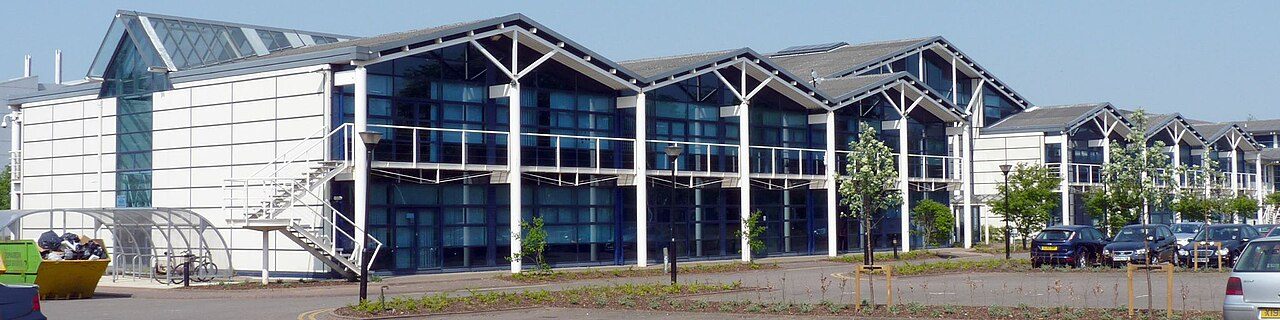
The cluster is physical: most knowledge-intensive employment sits on parks and campuses rather than in the city centre. The main sites, south to north and east to west, are these.
Cambridge Science Park is the original: Trinity College land, developed from 1970, managed today by a wholly owned subsidiary of the college. The Bradfield Centre on the park provides workspace for start-ups. St John's Innovation Centre and the surrounding St John's Innovation Park were established by St John's College; the centre, founded in 1987, now hosts more than 80 companies employing over 500 people, and Autonomy, the games studio Jagex and the sensor firm Owlstone all started there. The park keeps building: the Dirac Building, due in spring 2027, will add 85,000 sq ft of office space at its north-western gateway.
Cambridge Biomedical Campus in the south is now the largest employment site in the area, with more than 22,000 staff across hospitals, institutes and companies. Babraham Research Campus hosts more than 60 life-science companies alongside 2,000 staff and 300 academic researchers around the Babraham Institute, which works on healthy ageing, with an incubator, Accelerate@Babraham, offering pre-seed founders mentoring and up to a year of shared laboratory space. Granta Park south of the city is a 120-acre estate owned and managed by BioMed Realty and TWI, home to Illumina, Pfizer and Bicycle among others; the games studio Jagex chose it for a new headquarters in July 2026. The Wellcome Genome Campus at Hinxton houses the Wellcome Sanger Institute and a growing community working on genomics, biodata and machine learning, and is adding a 147,000 sq ft laboratory building, The Sequence, due in late 2027.
University spin-outs
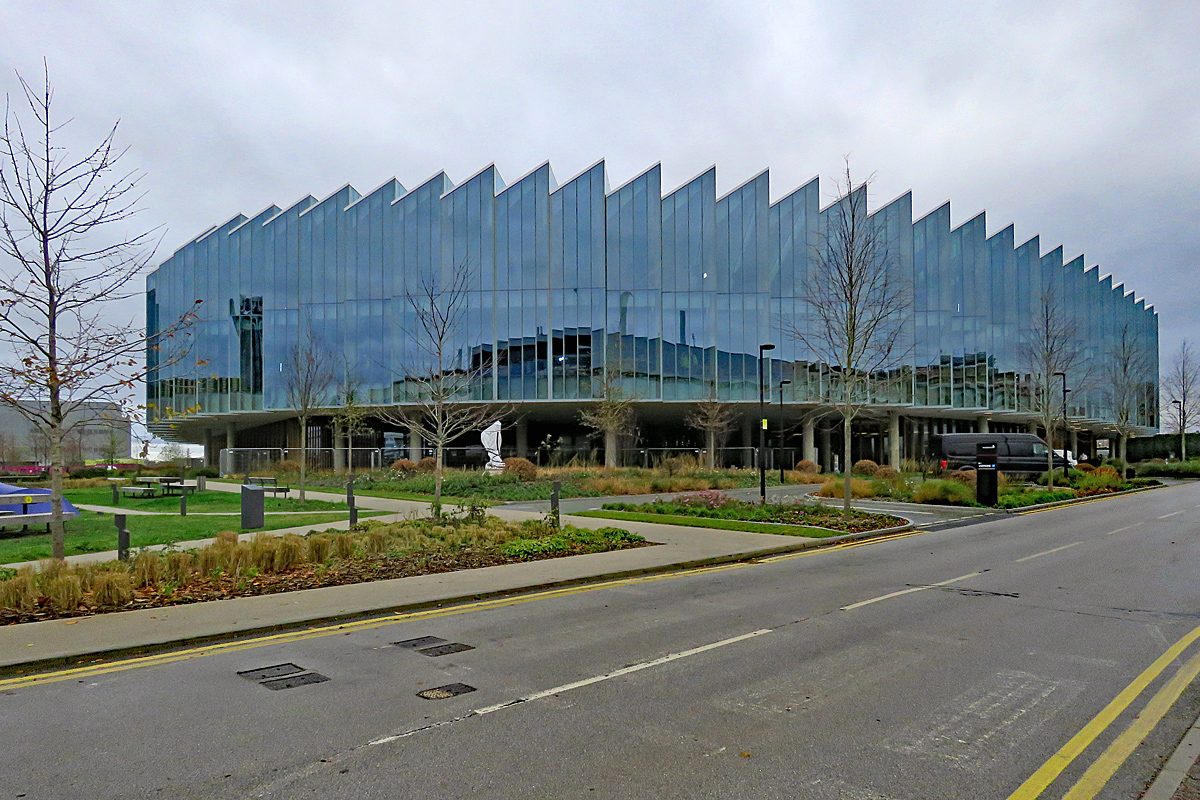
The University of Cambridge commercialises research through Cambridge Enterprise, part of the university, which handles consultancy, intellectual property and licensing, new-company formation and seed funding. A newer front door for founders is Founders at the University of Cambridge, an initiative run with Cambridge Enterprise that connects researchers with capital, venture-building programmes and mentors. The path from laboratory bench to listed company is well documented: Solexa's sequencing chemistry moved from the Chemistry Department into a start-up and then into Illumina's instruments, and Arm's processor team moved from Acorn into a company of its own. Our chronicle looks at the route from lab to market.
The colleges matter as landlords, not just as educators. Trinity College owns the Cambridge Science Park estate, and St John's College established its innovation centre and park. That landowner role is part of why the cluster has a permanent physical footprint instead of dispersing.
Schools and colleges
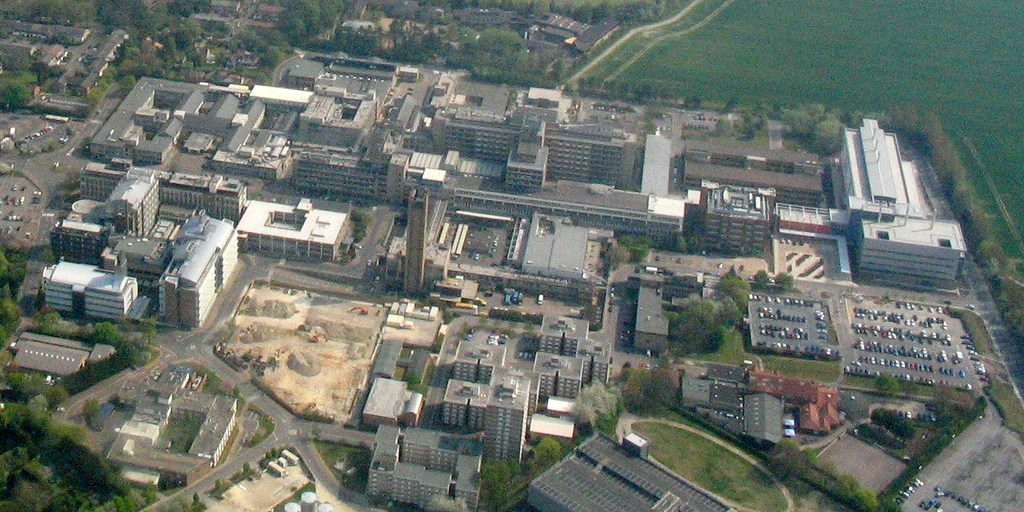
The cluster also grows its own people, and one school sits physically inside it. The Cambridge Academy for Science and Technology (CAST) stands on Robinson Way, on the Cambridge Biomedical Campus, a few minutes' walk from Addenbrooke's Hospital and the AstraZeneca Discovery Centre. It opened in September 2014 as UTC Cambridge, founded with Cambridge Regional College, Cambridge University Health Partners and the Wellcome Sanger Institute, and took its present name in 2017. It teaches pupils aged 13 to 19, has around 430 of them, and was rated Good by Ofsted in June 2023. What makes it unusual is the work: alongside A levels and T levels, pupils take on Challenge projects set and led by employees of nearby employers, among them AstraZeneca and Zeiss. A teenager here can spend a Tuesday on a real research problem posed by a company whose laboratory is across the road.
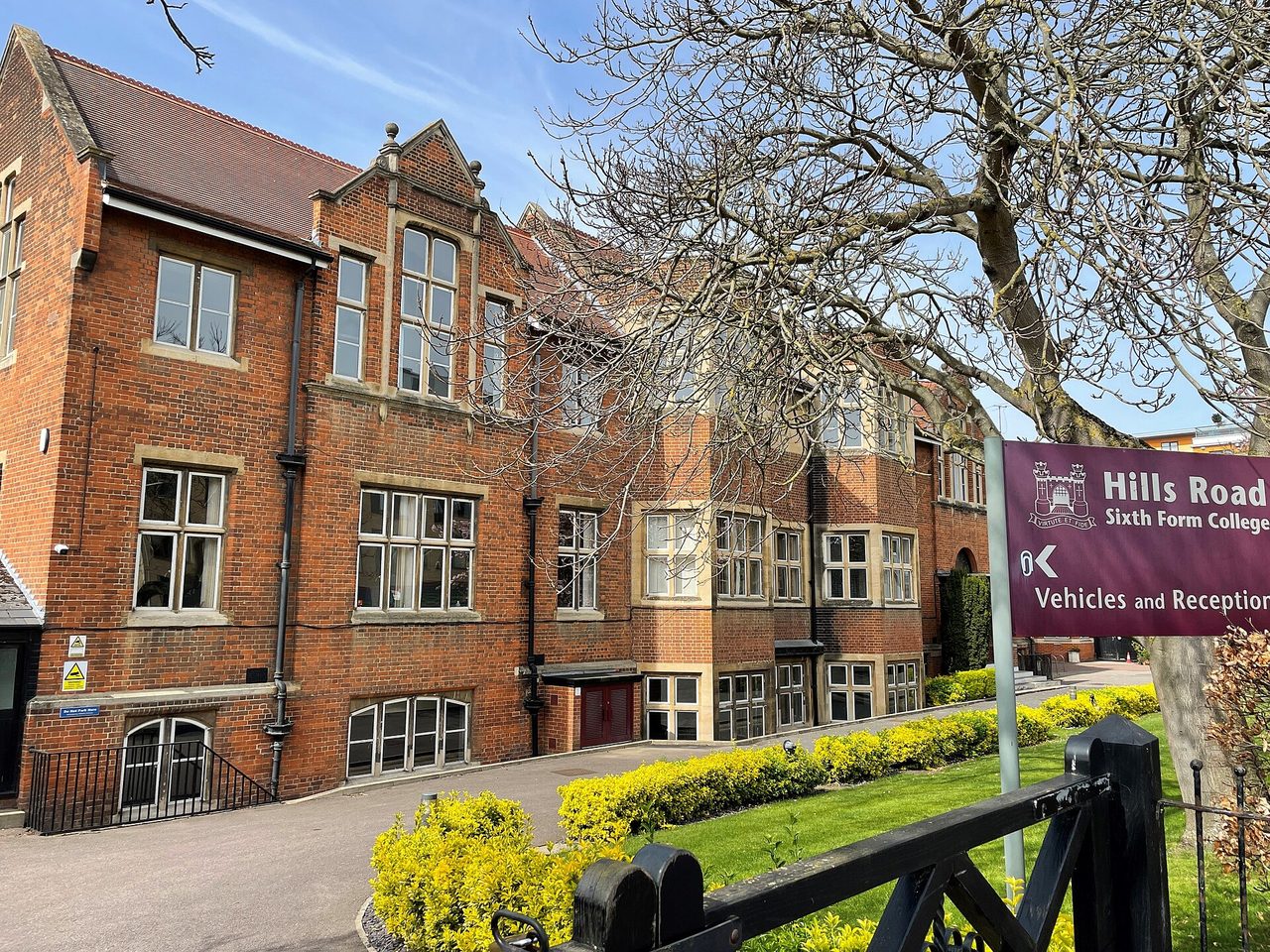
It is not the only route. Hills Road Sixth Form College is the largest of them, with roughly 2,700 students and with science and mathematics as its biggest subjects; Long Road Sixth Form College teaches a comparable number across A levels and vocational courses; and Cambridge Regional College carries the technical and apprenticeship side, including laboratory and engineering pathways. Between them these four are where most local people first meet the cluster, long before a spin-out or a job offer.
Two things make this more than classroom science. The first is time inside real work: CAST's Challenge projects run "one day a week, every week", and pupils who take a T Level must complete an industry placement of at least 315 hours, roughly 45 days, which is about a fifth of the whole programme. In a city where the employer is often across the road, that placement is a laboratory bench or a design office rather than a work-experience folder. The second is competition: school teams here pitch ideas to judges in enterprise and start-up contests, with prize money for the winners, and biomedicine is a favourite subject because the pupils can see the industry from the classroom window. For a fifteen-year-old, standing in front of a panel with a medical idea of your own is a different kind of lesson, and it lands years before any university application.
"In Year 10 we had a Challenge project set by a company: we had to work out how to show what goes on inside a biomedical laboratory. We worked on it as a team and built the presentation together, and our project came first. The best part was that the brief came from people who do this every day, not from teachers."
Investors and accelerators
Several investment firms work almost only with Cambridge companies. Cambridge Innovation Capital describes itself as a Series A investor in the Cambridge ecosystem and invests through a long-standing relationship with the university; the university's own engagement site puts its assets above £600 million across more than 45 companies. Amadeus Capital Partners has backed more than 200 companies and raised over $1.3 billion since 1997, investing in AI and computing, health and sustainability. IQ Capital is a deep-tech firm that has partnered with more than 200 European founders since 2005, leading rounds from pre-seed to Series A. Cambridge Angels is a network of exited entrepreneurs backing early-stage technology and healthcare companies. Start Codon, a Cambridge-based life-sciences accelerator, has invested in 28 early-stage ventures. The three established firms and a newer fund regularly meet founders together: CIC, Amadeus and Balderton co-host an investor evening during Cambridge Tech Week, the city's annual technology festival, which we cover in our Cambridge Tech Week 2026 guide.
Growth pains
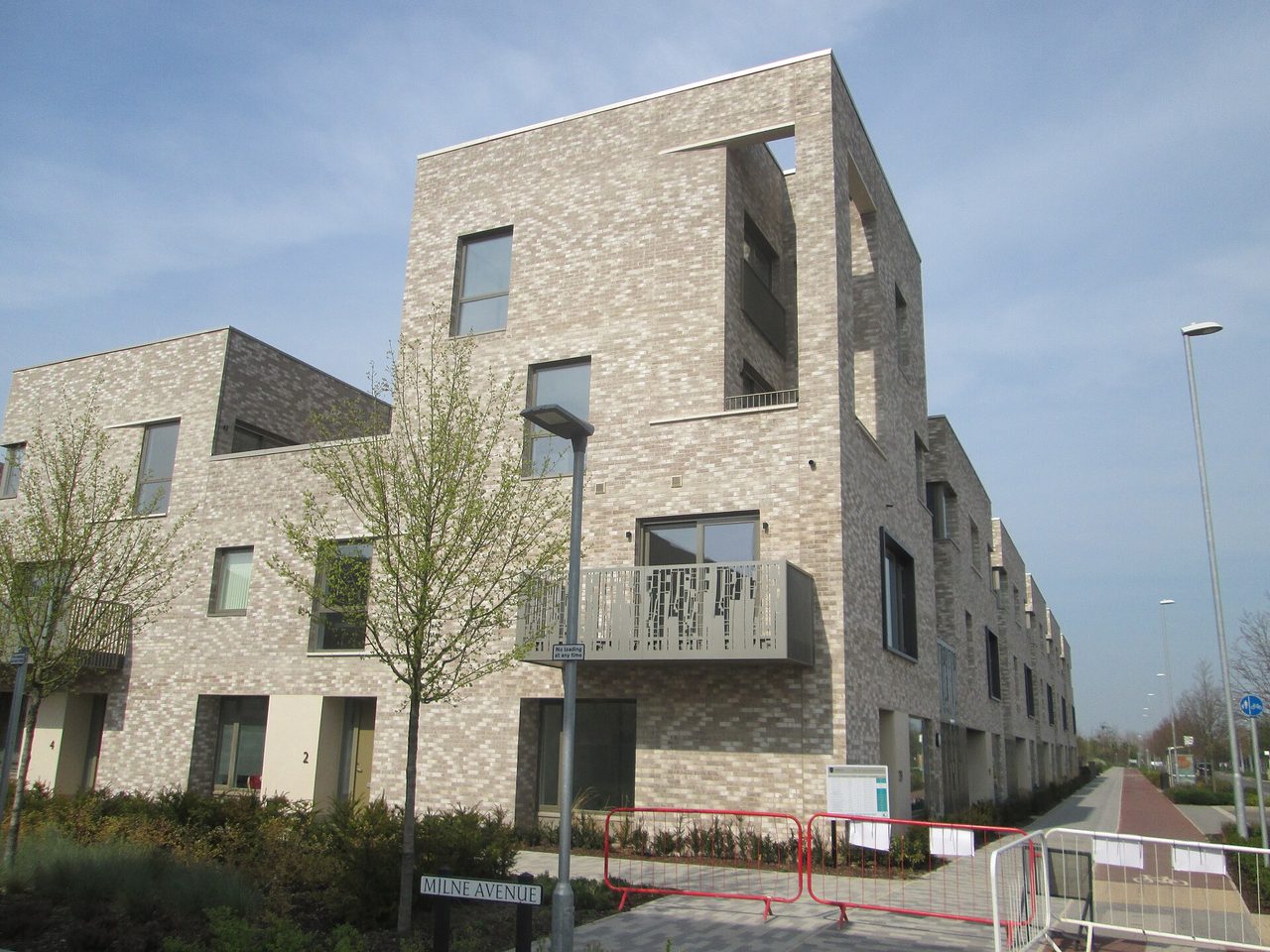
Growth has outrun infrastructure, and the constraints are documented in unusual detail. On housing, the government's Case for Cambridge notes the city is the least affordable in the UK after London: the median house costs 12.7 years of median pay against an English average of 8.4, prices rose 78 per cent in ten years while pay rose 23 per cent. On laboratory space, businesses were seeking 2.2 million sq ft across the Oxford-Cambridge-London triangle, and larger occupiers can wait years for the right facility.
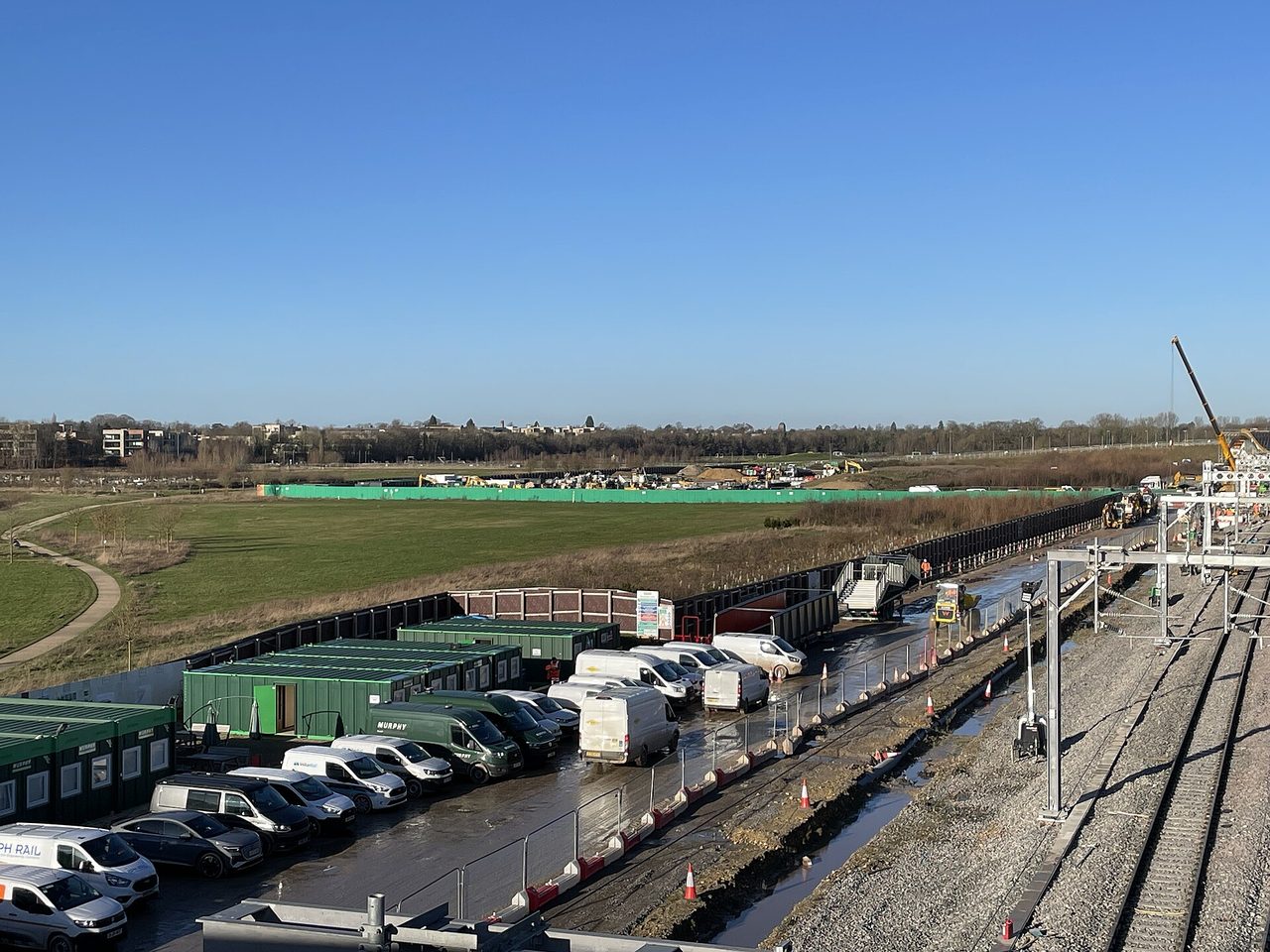
Water is the hardest limit. The Environment Agency has advised that new development must not increase abstraction from the chalk aquifer that feeds the area's chalk streams, including the Cam and the Granta. The government paper records more than 9,000 homes and 300,000 square metres of commercial space unable to proceed through planning, and points to two strategic fixes: a transfer from Grafham Water around 2032 and a new Fens Reservoir in the mid-2030s. On transport, residents consistently name congestion and unreliable public transport as the main problems; the CBR cluster study notes Cambridge South station, serving the Biomedical Campus, was due to open in the mid-2020s. Some links have improved: the guided busway connects Huntingdon with the city and its stations, and the A14 upgrade has helped growth along the Cambridge-Huntingdon corridor. On the table are further busway and road schemes to serve the southern campuses. A quieter warning comes from the same researchers: the birth rate of new companies in Greater Cambridge more than halved over six years to 2023-24, which matters because young knowledge-intensive firms generate a disproportionate share of later job growth. In 2024 the government set up the Cambridge Growth Company to coordinate housing, transport and water planning.
What this means for you
New to the vocabulary? Our Cambridge A–Z explains terms such as spin-out, science park and knowledge-intensive sectors in plain English.
For a specialist, the practical entry points are company career pages, recruiters that serve the parks, and the seminar rooms: most parks run events where teams present their work, and the city has an active networking scene for meeting people outside your own lab or office. For a founder, the natural starting points are Cambridge Enterprise and the Founders initiative, the accelerators above, and flexible space at the Bradfield Centre or St John's Innovation Centre. For a student, the cluster is reachable through internships, society talks and the annual festival week.
One administrative note for readers arriving from abroad: the UK immigration system includes dedicated work routes, and the rules sit on gov.uk rather than on any employer. This guide gives no visa advice and no assessment of anyone's chances; if you need it, read the official guidance or speak to a regulated adviser.
Frequently asked questions
What does KI mean in cluster reports?
KI stands for knowledge-intensive: sectors where graduate skills and research spending drive output, such as software, life sciences and high-tech manufacturing. Reports contrast KI with non-KI employment because almost all of Cambridge's recent job growth has come from KI firms.
Where do the cluster numbers come from?
From Cambridge Ahead's Cambridge Cluster Insights, an annual census of audited company accounts compiled by the Centre for Business Research at the university. The dashboard and its methodology notes are public, so any figure in this guide can be traced back to a table.
Are the science parks open to visitors?
They are workplaces first. St John's Innovation Centre runs guided tours for groups by arrangement, and most parks host public events, but there is no general right of access to laboratories and offices.
Does the university own Silicon Fen?
No. The university supports company formation through Cambridge Enterprise, but the estate owners are the colleges themselves: Trinity College owns the Science Park estate, and St John's College owns its innovation park and centre, alongside commercial owners such as BioMed Realty and TWI at Granta Park.
Which visa do I need to work in Cambridge tech?
This guide cannot answer that: immigration advice is regulated in the UK. The available work routes and their requirements sit on gov.uk, and our visa chronicle explains only how one route works in general terms.
Glossary
Cambridge terms used in this article. Each links to its entry in our Cambridge A–Z.
- Silicon Fen
- The working name of the technology cluster in and around Cambridge, built on software, electronics and biotechnology firms.
- Science park
- A managed estate where research companies cluster near the University; Cambridge's original dates to 1970.
- College
- One of 31 self-governing communities that make up the collegiate University alongside its faculties and departments.
- Guided busway
- A bus rapid transit route where buses run on a dedicated guided track, linking Cambridge with St Ives and Huntingdon; described as the world's longest guided busway.
- Cambridge Biomedical Campus
- The hospital and medical research site on the southern edge of Cambridge, home to Addenbrooke's, the Rosie and Royal Papworth hospitals, research institutes and companies.
- Knowledge-intensive sectors
- The label for research-driven sectors, such as software, life sciences and high-tech manufacturing, tracked apart in cluster data.
- Cambridge Phenomenon
- The name for the rapid growth of technology and life-science companies around Cambridge since the 1960s.
- Innovation centre
- A managed building where early-stage technology companies rent flexible space and share business support; Cambridge's St John's Innovation Centre opened in 1987.
- Spin-out
- A new company formed to commercialise research or intellectual property developed inside the University.
- Cambridge Enterprise
- The University's commercialisation arm, turning research into companies, licences and investment.
- Cambridge Cluster Insights
- Cambridge Ahead's public data resource on companies within 20 miles of Cambridge, reporting their number, turnover, employment and growth by sector.