Nabokov in Cambridge: a walk through his Trinity years, 1919–1922
Where the future author of Lolita lived, studied, kept goal and bought a Russian dictionary in the market, and how Cambridge later turned up in his novels.
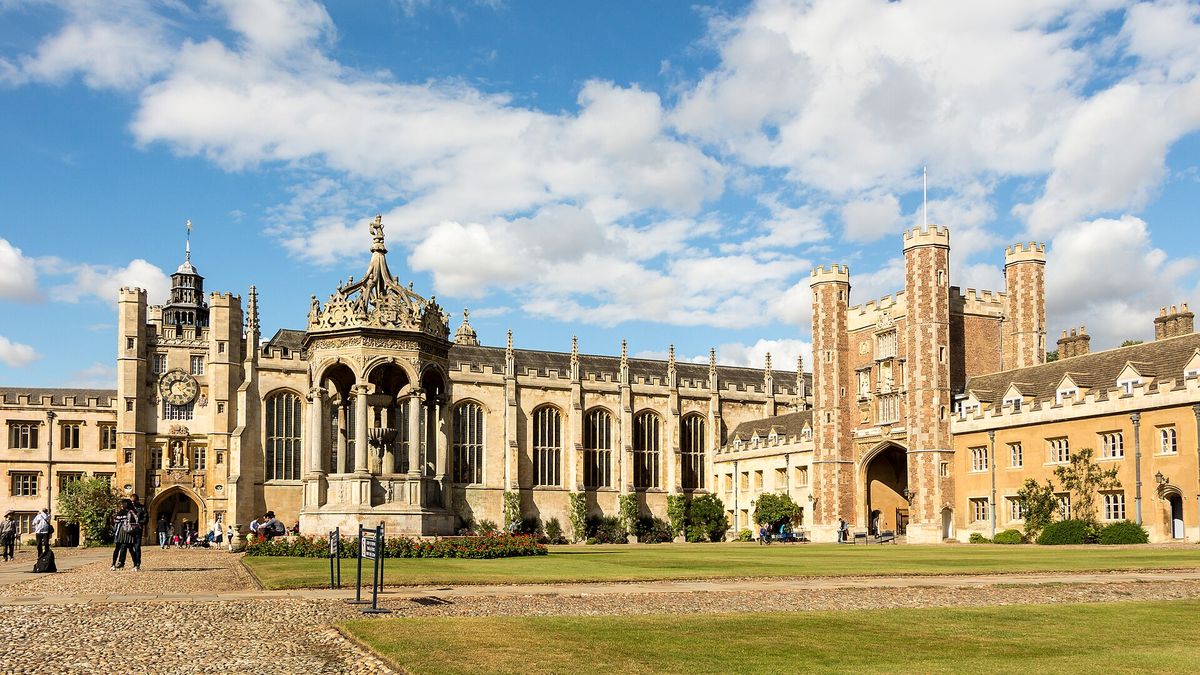
In October 1919 a twenty-year-old Russian refugee moved into rooms in Great Court at Trinity College. He had left Russia six months earlier from Sevastopol on a small Greek cargo ship, the *Nadezhda*, and he would never go back. His name was Vladimir Nabokov. Thirty-six years later he published *Lolita* in English and became one of the best-known novelists in the world.
Most of the places from his three Cambridge years are still there, and you can walk past almost all of them in an hour. This guide follows them in order, explains what happened in each, and ends with the novels in which Cambridge reappears.
At a glance
| Place | What happened there | Today |
|---|---|---|
| Great Court, Trinity College | his first rooms, staircase R, set 6, from October 1919 | the college's main court; visitor access at set times |
| Trinity Lane | the narrow lane he walked each morning to the college baths | a public lane between Trinity and Trinity Hall |
| Market Square | the bookstall where he bought a second-hand Russian dictionary | Cambridge's daily market |
| Christ's College | where his brother Sergey studied at the same time | open to visitors at set times |
| The Backs | where he walked by the river, and came back to walk years later | the lawns behind the colleges along the Cam |
Why he came to Cambridge
The Nabokovs had been one of the wealthiest liberal families in St Petersburg. His father, Vladimir Dmitrievich Nabokov, was a leading figure in the Constitutional Democratic party. After the Bolshevik revolution the family moved south to the Crimea and in April 1919 left Russia altogether. They reached England that spring. In the autumn the two eldest sons went up to Cambridge: Vladimir to Trinity, Sergey to Christ's College.
He first read zoology, the science of the butterflies he had collected since childhood, and then changed to modern languages, French and Russian. In his second year he took a starred first in Part I of the Tripos, the Cambridge degree examination. He passed Part II in 1922 with a second and took his BA that summer.
Stop 1: Great Court
Nabokov's first rooms were on staircase R of Great Court, set 6. He shared them at first with another young Russian émigré. In his memoir *Speak, Memory* he remembers the cold of English rooms and his struggle to light the fire: his method was to hold a sheet of *The Times* across the fireplace so that the fire would draw.
Great Court is the largest enclosed court in Cambridge. Look for the fountain in the centre and the clock tower over the chapel side; the court is described in our architecture guide. Trinity is a working college, and visitors can usually enter only at certain times of year and day. Check the college website before you go.
Stop 2: Trinity Lane
Later Nabokov lived in lodgings rather than in college, and the rooms had no bathroom. Every morning he walked through Trinity Lane to the college baths. When chapter 13 of *Speak, Memory*, the Cambridge chapter, first appeared in *Harper's Magazine* in January 1951, it was called "Lodgings in Trinity Lane".
The lane runs between Trinity and Trinity Hall. It is narrow, quiet and much as he would have known it, which makes it the best place on this walk to imagine him.
Stop 3: Market Square
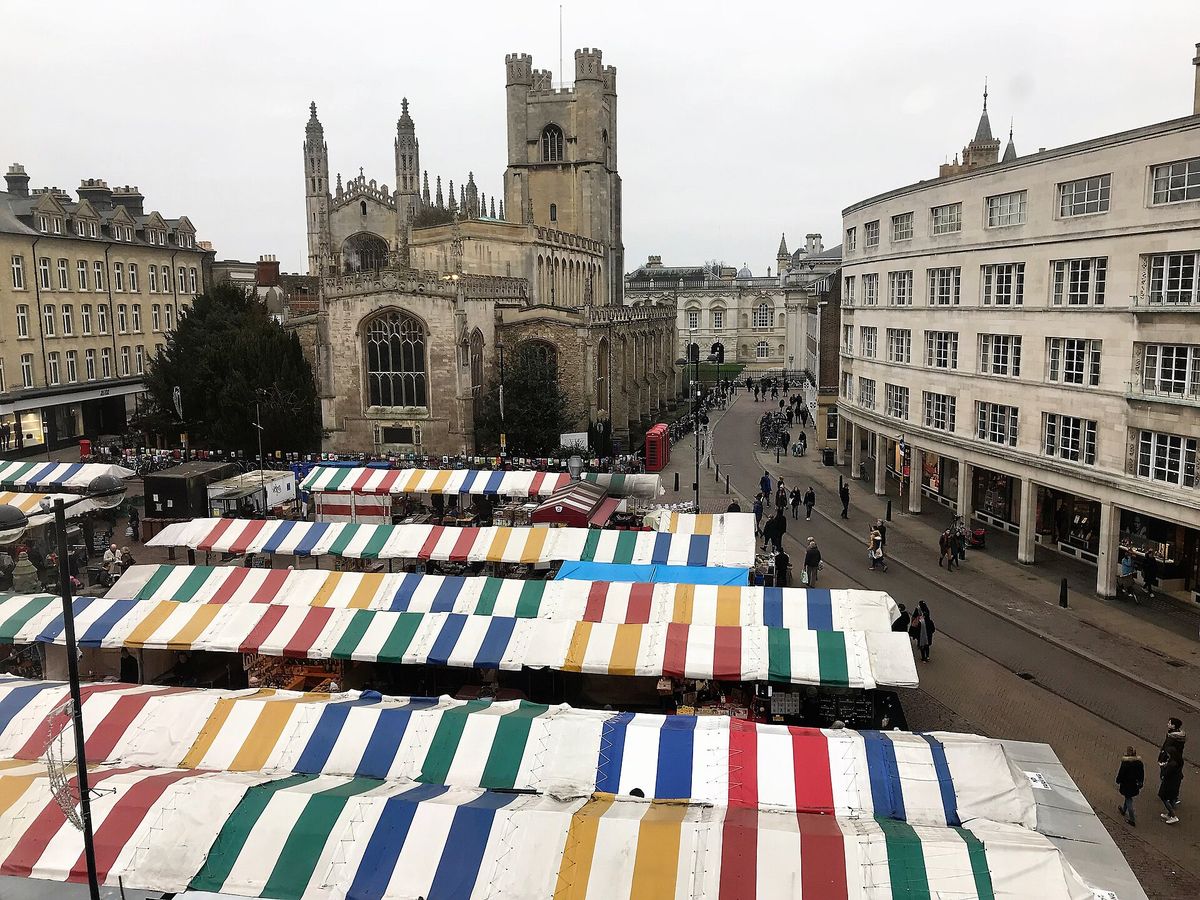
On a bookstall in the market Nabokov found a second-hand copy of Vladimir Dahl's dictionary of the Russian language, four large volumes. He was afraid of losing his Russian among English speakers, and he set himself to read at least ten pages of the dictionary a day, noting the words he liked.
That habit is the key to his Cambridge years. While he studied in English, he was writing poems in Russian, and from January 1921 he published them in *Rul'*, the Berlin émigré newspaper his father helped to edit, under the pen name Vladimir Sirin. The market still trades every day; our markets guide says what you will find there now.
Stop 4: Christ's College
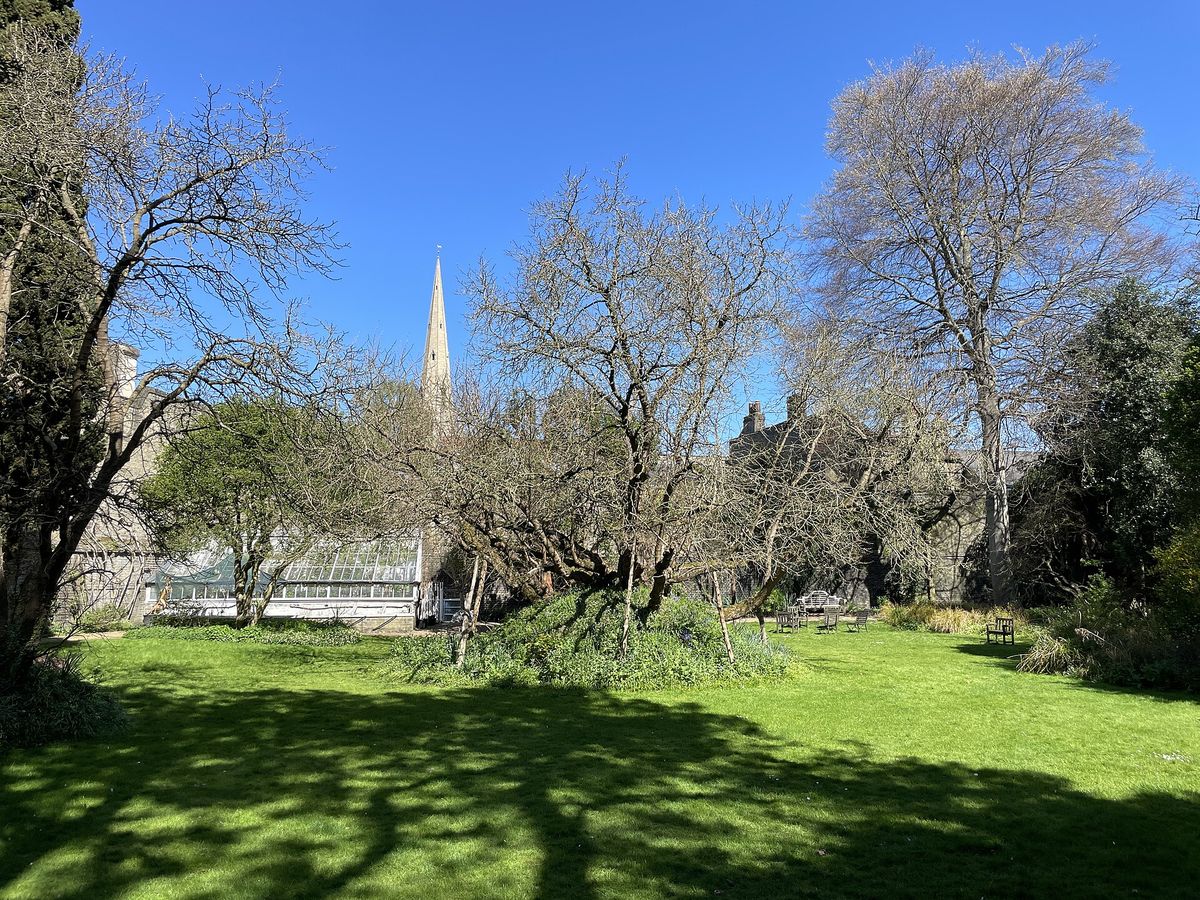
Sergey Nabokov, a year younger, read Russian and French at Christ's at the same time. The brothers played tennis together and then went separate ways after 1922. Sergey's life ended tragically: he was arrested by the Nazis and died in the Neuengamme concentration camp in January 1945. Christ's is also John Milton's college; our literary guide covers the other writers connected with it.
Stop 5: The Backs and the football field
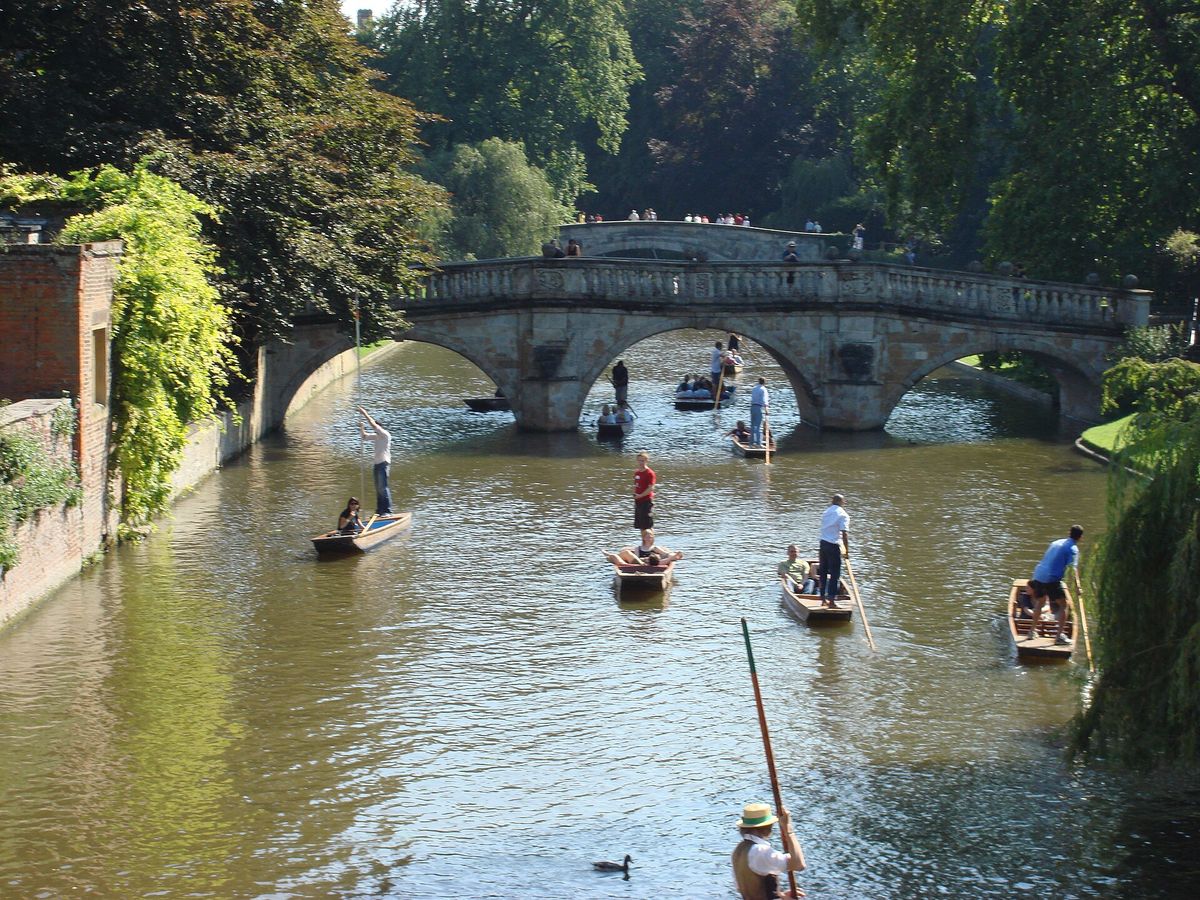
Nabokov kept goal in college football, and his description of it in *Speak, Memory* is the most quoted thing he wrote about Cambridge. Standing alone at the far end of a wet English pitch, he felt less like the keeper of a football goal than "the keeper of a secret". The secret was Russia.
He walked a great deal along the Backs, the lawns behind the colleges. Years after he had left, he came back to Cambridge briefly, looking for help in finding work, and in *Speak, Memory* he describes a rainy walk along the Backs on that visit.
The end of the Cambridge years
On 28 March 1922, in his final year, his father was shot dead in Berlin while shielding the liberal politician Pavel Milyukov from an assassin. Nabokov sat his finals in June and left England for Berlin, where his mother and the younger children were living. He never lived in Britain again.
Cambridge in his novels
Cambridge appears twice in his fiction. In *Glory*, a Russian novel written in 1930–1932, the young hero Martin Edelweiss goes to Cambridge, keeps goal there and shares many of his creator's Cambridge impressions, down to the fireplaces and the English morning weather. In *The Real Life of Sebastian Knight*, his first novel in English, written in Paris in 1938–1939 and published in 1941, the narrator travels to Cambridge to find the people who knew his half-brother as a student.
Frequently asked questions
Which college did Nabokov attend?
Trinity College, from October 1919 to June 1922. His brother Sergey was at Christ's College at the same time.
What did Nabokov study at Cambridge?
He began with zoology and changed to modern languages, French and Russian. He took a starred first in Part I of the Tripos and a second in Part II, and received his BA in 1922.
Can you visit Nabokov's rooms?
The rooms are part of a working college and are not open to the public. Great Court can usually be seen when Trinity is open to visitors; check the college website for times.
Where does Nabokov write about Cambridge?
Mainly in chapter 13 of his memoir *Speak, Memory*, and in the novels *Glory* and *The Real Life of Sebastian Knight*.
Glossary
Cambridge terms used in this article. Each links to its entry in our Cambridge A–Z.
- College
- One of 31 self-governing communities that make up the collegiate University alongside its faculties and departments.
- Market Square
- The open square in the centre of Cambridge, also called Market Hill, where an outdoor market has traded from stalls since Saxon times.
- The Backs
- The river frontage where several Colleges back onto the Cam, with lawns, gardens and bridges along the water.
- Tripos
- The examinations and courses for a Cambridge undergraduate degree, split into Parts that students combine across years.
Sources
- en.wikipedia.org/wiki/Vladimir_Nabokov
- en.wikipedia.org/wiki/Speak,_Memory
- en.wikipedia.org/wiki/Glory_(Vladimir_Nabokov_novel)
- en.wikipedia.org/wiki/The_Real_Life_of_Sebastian_Knight
- en.wikipedia.org/wiki/Sergey_Nabokov
- en.wikipedia.org/wiki/Great_Court,_Trinity_College,_Cambridge
- thenabokovian.org/sites/default/files/2018-01/NABOKV-L-0022894___body.html
- trin.cam.ac.uk/
This is an independent member's guide compiled by Cambridge Society. We are not affiliated with the venues and institutions mentioned; opening arrangements change, so always confirm details on the official websites before making plans.
← Back to Articles