Literary Cambridge: libraries, writers and where to find them
Three historic libraries you can visit, the colleges where Milton, Byron, Wordsworth, Tennyson, Plath and Hughes studied, and the stories attached to them.
Cambridge's literary history is written into its colleges and libraries. John Milton was a student at Christ's, Wordsworth at St John's, Coleridge at Jesus, Byron and Tennyson at Trinity. In the 20th century Rupert Brooke and E. M. Forster were at King's, and Sylvia Plath, then studying at Newnham, met Ted Hughes, who had studied at Pembroke, in 1956. Some of the city's historic libraries, which hold manuscripts from the Anglo-Saxon Chronicle to Winnie-the-Pooh, can be visited.
This guide covers the libraries you can visit, the writers' colleges and the stories attached to them, and a walk out to Grantchester.
Libraries you can visit
The Wren Library, Trinity College
Christopher Wren's library at Trinity was completed in 1695. It is open to the public on a limited schedule, with no admission charge.
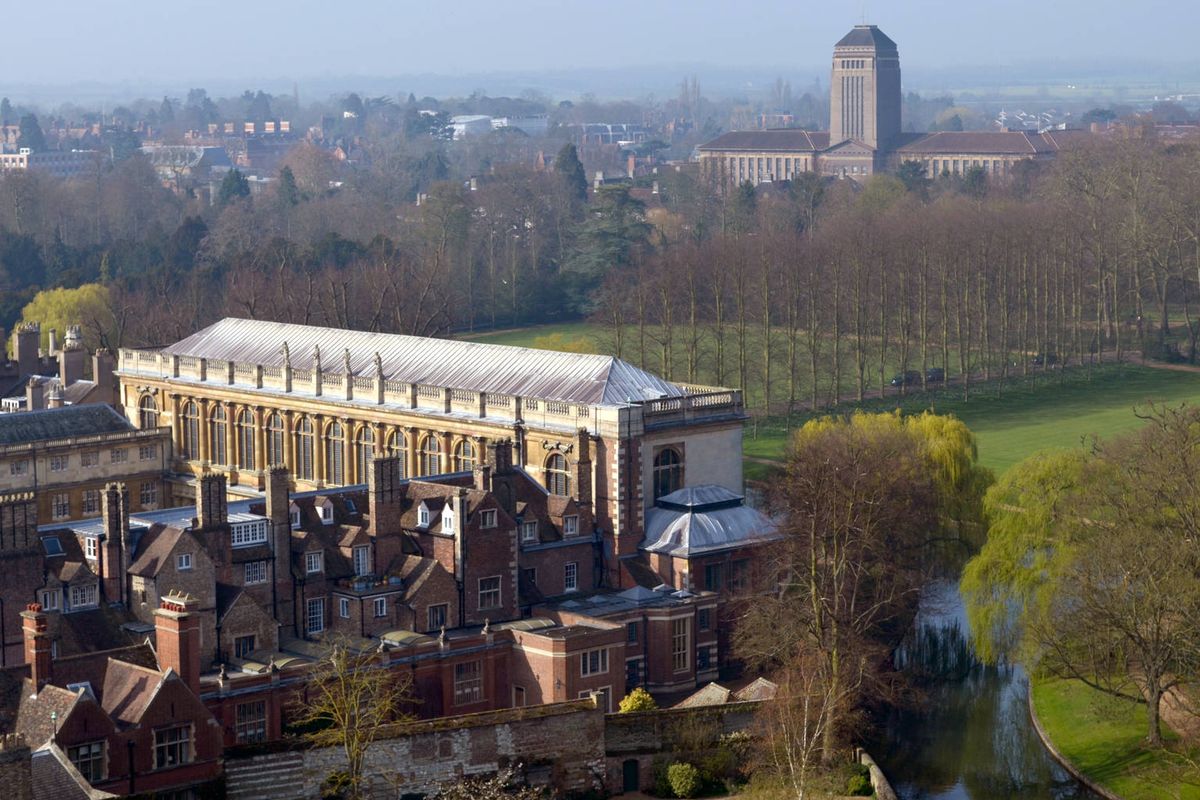
Its collections include Isaac Newton's own first edition of the Principia, A. A. Milne's manuscripts of Winnie-the-Pooh and The House at Pooh Corner, a collection of autograph poems by John Milton, a 14th-century manuscript of Piers Plowman, the Capell collection of early Shakespeare editions, and books printed by William Caxton. At the south end stands Bertel Thorvaldsen's statue of Lord Byron, which was first offered to Westminster Abbey and refused because of the poet's reputation. Our architecture guide covers the building.
The Pepys Library, Magdalene College
Samuel Pepys left his personal library to Magdalene College, and it passed to the college intact in 1723, after his nephew's death. It holds more than 3,000 volumes, including his diary, still arranged by size in Pepys's own bookcases, as he catalogued them. Under the terms of the bequest, no book may be sold and none may be added. It is one of the most important surviving private libraries of the 17th century.
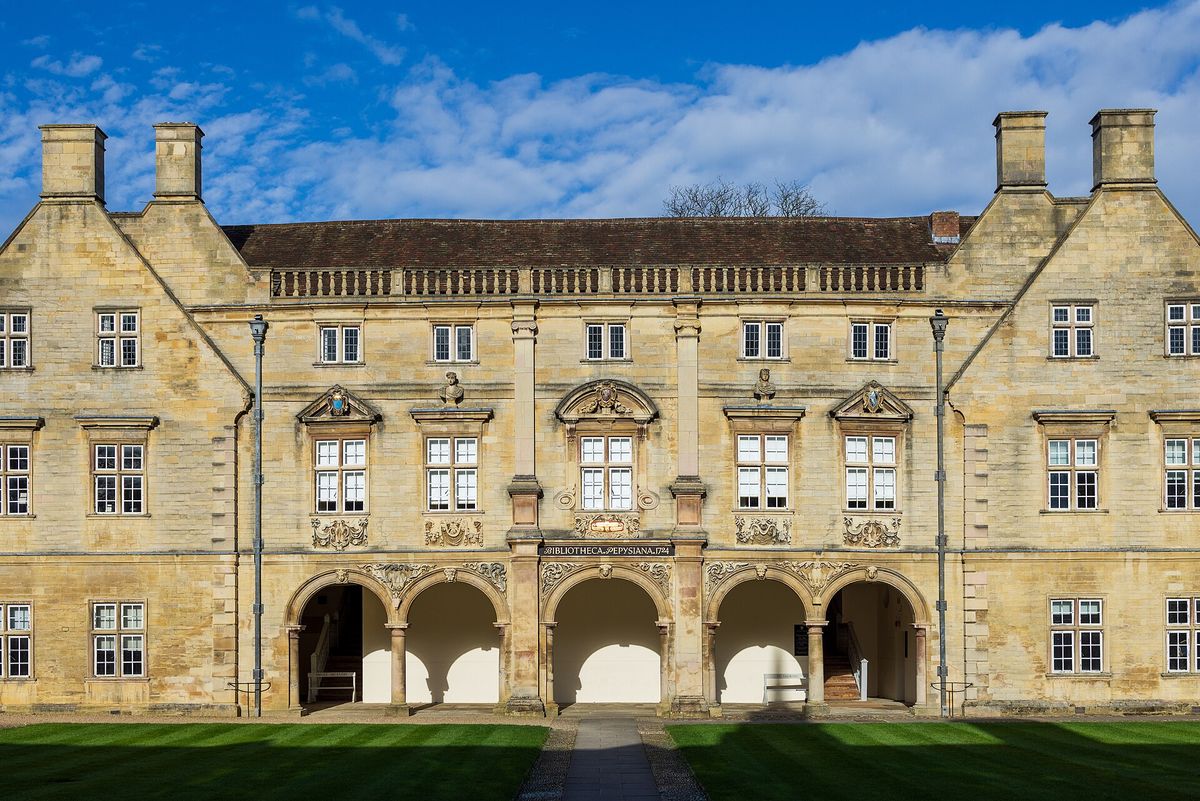
The library is on the first floor of the Pepys Building, in the college's second court. It is usually open to the public in the afternoons, Monday to Saturday. Check Magdalene's website for current times.
The Parker Library, Corpus Christi College
The Parker Library holds more than 600 manuscripts, most of them bequeathed by Matthew Parker, Archbishop of Canterbury and a former Master of Corpus Christi. Its Anglo-Saxon holdings include the earliest copy of the Anglo-Saxon Chronicle, written around 890, the Old English Bede and King Alfred's translation of Pastoral Care. It also holds the St Augustine Gospels, which are carried to Canterbury for the enthronement of each Archbishop and were used at the coronation of King Charles III in 2023.
Access to the full collection is limited to scholars, but the public can see some of its treasures at open days, including the annual Open Cambridge event, and on private tours.
Cambridge University Library
The University Library can trace a common library back to the early 15th century, and today it holds about 9 million items and receives copies of UK publications as a legal deposit library. It is primarily for members of the university, but members of the public can apply for reference access if their research requires it.
Writers and their colleges
John Milton at Christ's College
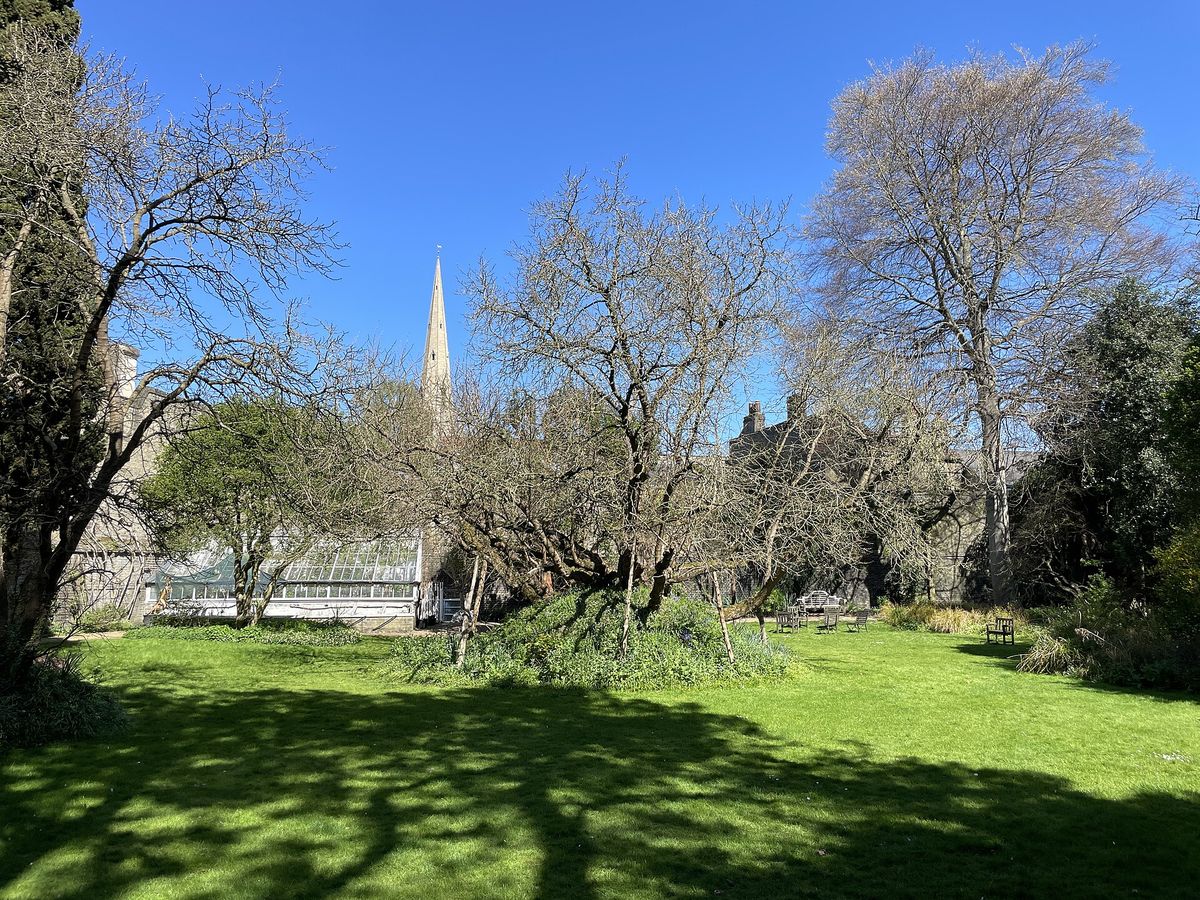
Milton studied at Christ's College. His complexion was so fair, according to the biographer John Aubrey, that he was called "the Lady of Christ's College". In the Fellows' Garden stand two mulberry trees, the older planted in 1608, the year Milton was born. Both have toppled sideways, but they are earthed up around the trunks and still fruit every year. Charles Darwin is another alumnus.
Wordsworth at St John's and Coleridge at Jesus
William Wordsworth began at St John's College in 1787 and took his BA in 1791, spending holidays on walking tours. Samuel Taylor Coleridge was educated at Jesus College.
Byron and Tennyson at Trinity
Lord Byron spent three years at Trinity College. Because the college rules banned dogs, he kept a tame bear instead, noting that the statutes said nothing about bears. In a letter of 1807 he joked that the bear "should sit for a fellowship".
Alfred, Lord Tennyson entered Trinity in 1827 and joined the secret society known as the Cambridge Apostles. His elegy In Memoriam A.H.H. commemorates his friend Arthur Hallam, a fellow Trinity student who died at 22. A statue of Tennyson stands in Trinity's chapel.
Rupert Brooke at King's and Grantchester
Rupert Brooke went up to King's College in 1906 to study classics. He helped found the Marlowe Society, a university theatre club, and acted in the Cambridge Greek Play. From 1909 he lived at The Orchard in Grantchester, and later at the Old Vicarage next door. In 1912, homesick in Berlin, he wrote The Old Vicarage, Grantchester.
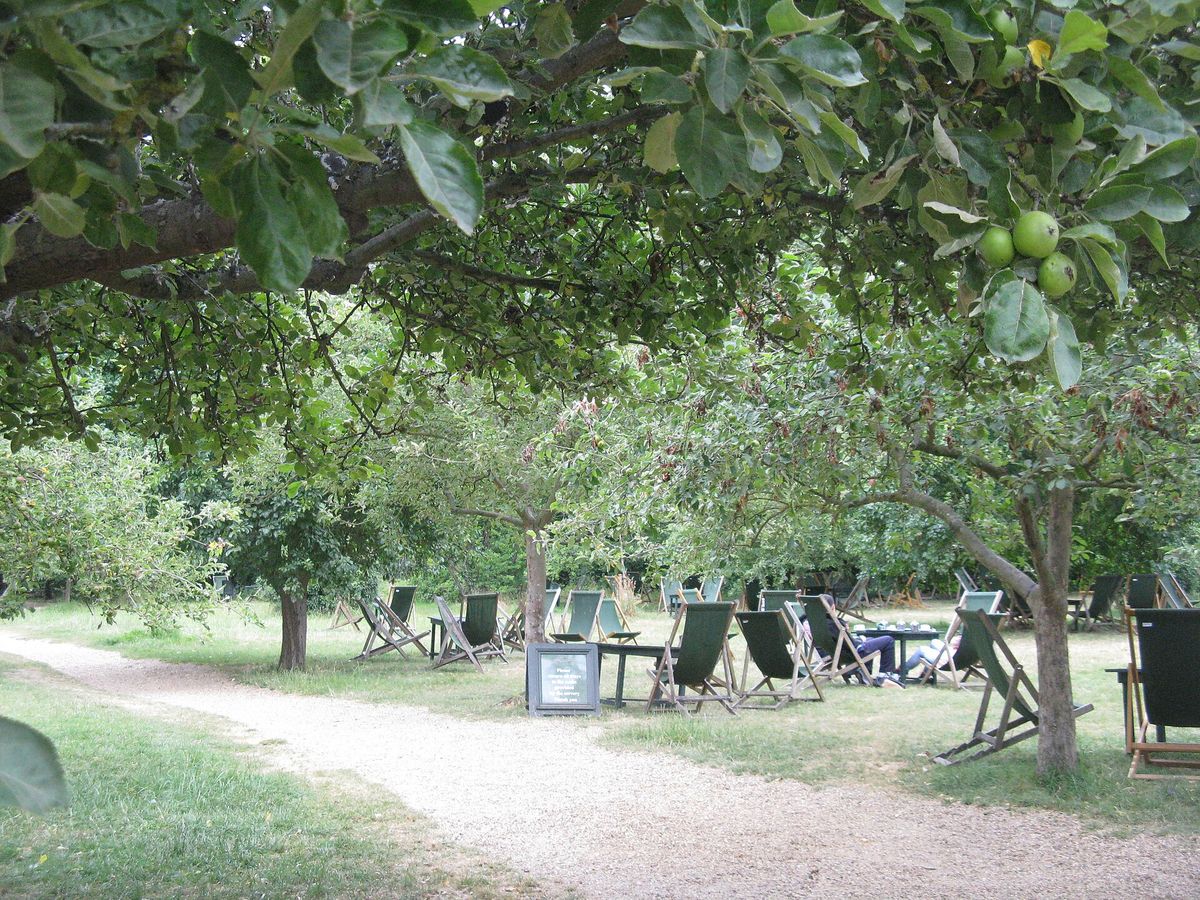
The Orchard has served tea under its apple trees since 1897. It is a pleasant walk from the city through Grantchester Meadows; see our parks and green spaces guide.
E. M. Forster at King's
E. M. Forster studied history and classics at King's College, where he met Lytton Strachey and Leonard Woolf. Decades after publishing Howards End (1910) and A Passage to India (1924), he was elected an honorary fellow of King's in January 1946 and lived for the most part in the college.
Sylvia Plath and Ted Hughes
Sylvia Plath came to Newnham College on a Fulbright Scholarship. Ted Hughes had studied at Pembroke College. On 25 February 1956 Hughes and his friends held a party to launch St Botolph's Review, a magazine that ran to a single issue. Plath came specifically to meet him. They married four months later, on 16 June 1956, in London.
A pub with a different kind of story
The Eagle on Bene't Street has a place in scientific rather than literary history. On 28 February 1953, Francis Crick interrupted lunch there to announce that he and James Watson had "discovered the secret of life", the structure of DNA. A blue plaque by the entrance marks it.
Bookshops
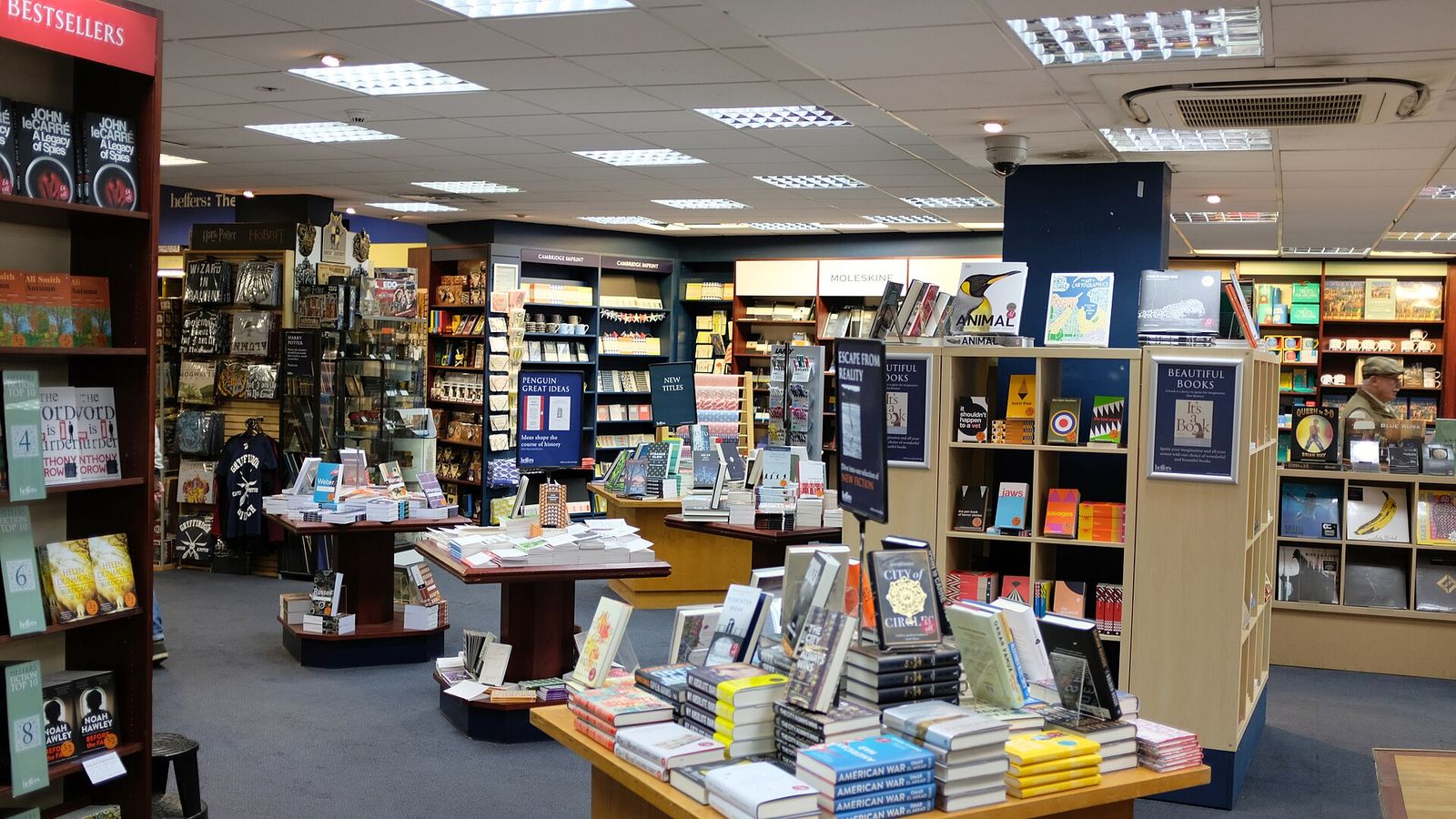
The Heffers bookshops in Cambridge were taken over by Blackwell's in 1999. Blackwell's itself is now owned by Waterstones. Bookshops change more often than libraries, so check current opening times and events before you visit.
Frequently asked questions
Can you visit the Wren Library in Cambridge?
Yes. The Wren Library at Trinity College is open to the public on a limited schedule, with no admission charge. Its collections include Newton's own copy of the Principia and A. A. Milne's manuscript of Winnie-the-Pooh.
Where is Samuel Pepys's diary kept?
In the Pepys Library at Magdalene College, Cambridge, among the more than 3,000 volumes Pepys left to the college, still in his own bookcases. The library is usually open to the public in the afternoons, Monday to Saturday.
Which famous writers studied at Cambridge?
Among many others: John Milton (Christ's), William Wordsworth (St John's), Samuel Taylor Coleridge (Jesus), Lord Byron and Alfred, Lord Tennyson (Trinity), Rupert Brooke and E. M. Forster (King's), Sylvia Plath (Newnham) and Ted Hughes (Pembroke).
Where did Sylvia Plath meet Ted Hughes?
At a party held on 25 February 1956 to launch St Botolph's Review, a poetry journal Hughes and his friends produced, while Plath was studying at Cambridge on a Fulbright Scholarship. They married four months later.
Why did Byron keep a bear at Trinity?
College rules banned dogs, and the statutes did not mention bears. Byron kept a tame bear instead, and joked that it should apply for a fellowship.
Glossary
Cambridge terms used in this article. Each links to its entry in our Cambridge A–Z.
- College
- One of 31 self-governing communities that make up the collegiate University alongside its faculties and departments.
Sources
- en.wikipedia.org/wiki/Wren_Library
- en.wikipedia.org/wiki/Pepys_Library
- en.wikipedia.org/wiki/Parker_Library
- en.wikipedia.org/wiki/Cambridge_University_Library
- en.wikipedia.org/wiki/John_Milton
- en.wikipedia.org/wiki/Christ%27s_College,_Cambridge
- en.wikipedia.org/wiki/William_Wordsworth
- en.wikipedia.org/wiki/Samuel_Taylor_Coleridge
- en.wikipedia.org/wiki/Lord_Byron
- en.wikipedia.org/wiki/Alfred,_Lord_Tennyson
- en.wikipedia.org/wiki/Rupert_Brooke
- en.wikipedia.org/wiki/Marlowe_Society
- en.wikipedia.org/wiki/E._M._Forster
- en.wikipedia.org/wiki/Sylvia_Plath
- en.wikipedia.org/wiki/Ted_Hughes
- en.wikipedia.org/wiki/Grantchester
- en.wikipedia.org/wiki/The_Eagle,_Cambridge
- en.wikipedia.org/wiki/Blackwell%27s
This is an independent member's guide compiled by Cambridge Society. We are not affiliated with the venues and institutions mentioned; opening arrangements change, so always confirm details on the official websites before making plans.
← Back to Articles