Cambridge parks and green spaces: a guide to nine places
The Botanic Garden, The Backs, the commons where cattle still graze, the meadows to Grantchester and an Iron Age hill fort: what each is like and how to visit.
Cambridge has a great deal of open land close to its centre. Much of it is common land that has survived for centuries: meadows along the River Cam where cattle still graze, open greens that host fairs and football, and college grounds that form one of the best-known views in England. A little further out are the village of Grantchester and a country park built around an Iron Age hill fort.
This guide covers nine places, from the most formal to the wildest, with what each is best for and how to visit.
At a glance
| Place | What it is | Entry |
|---|---|---|
| Cambridge University Botanic Garden | 16-hectare botanic garden with glasshouses | paid entry |
| The Backs | college grounds along the Cam | best seen from Queen's Road, the river or a punt |
| Jesus Green | riverside park with a 1920s lido | free |
| Midsummer Common | common land with grazing cattle and fairs | free |
| Parker's Piece | open green by the city centre | free |
| Christ's Pieces | Victorian park by the bus station | free |
| Coe Fen and Sheep's Green | riverside meadows and nature reserve | free |
| Grantchester Meadows | river meadows leading to Grantchester | free |
| Wandlebury Country Park | woodland, meadows and a hill fort | free; car parking charged |
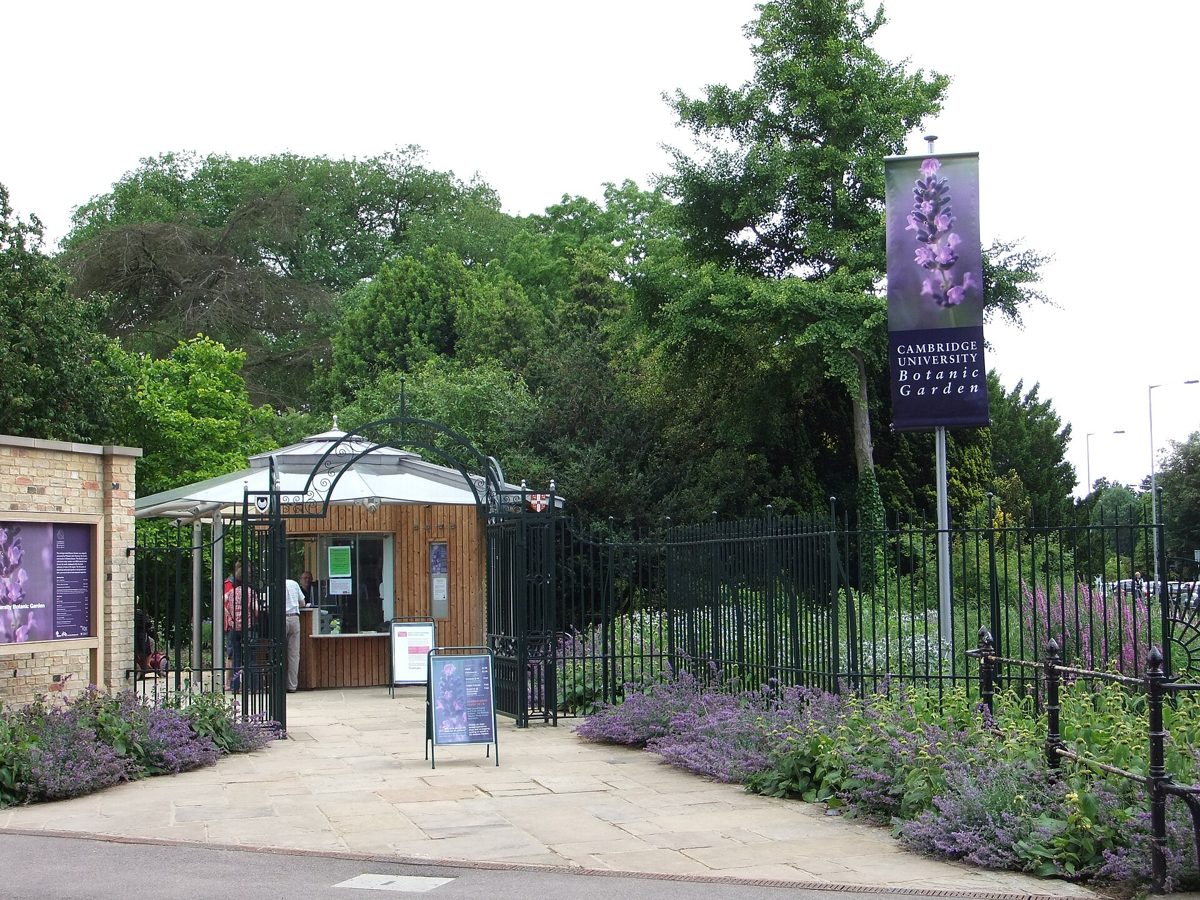
Cambridge University Botanic Garden
The Botanic Garden was created for the university in 1831 by Professor John Stevens Henslow, Charles Darwin's mentor, and opened to the public in 1846. It covers 16 hectares (40 acres) between Trumpington Road, Bateman Street and Hills Road, almost all on level ground, and holds over 8,000 plant species used for teaching and research.
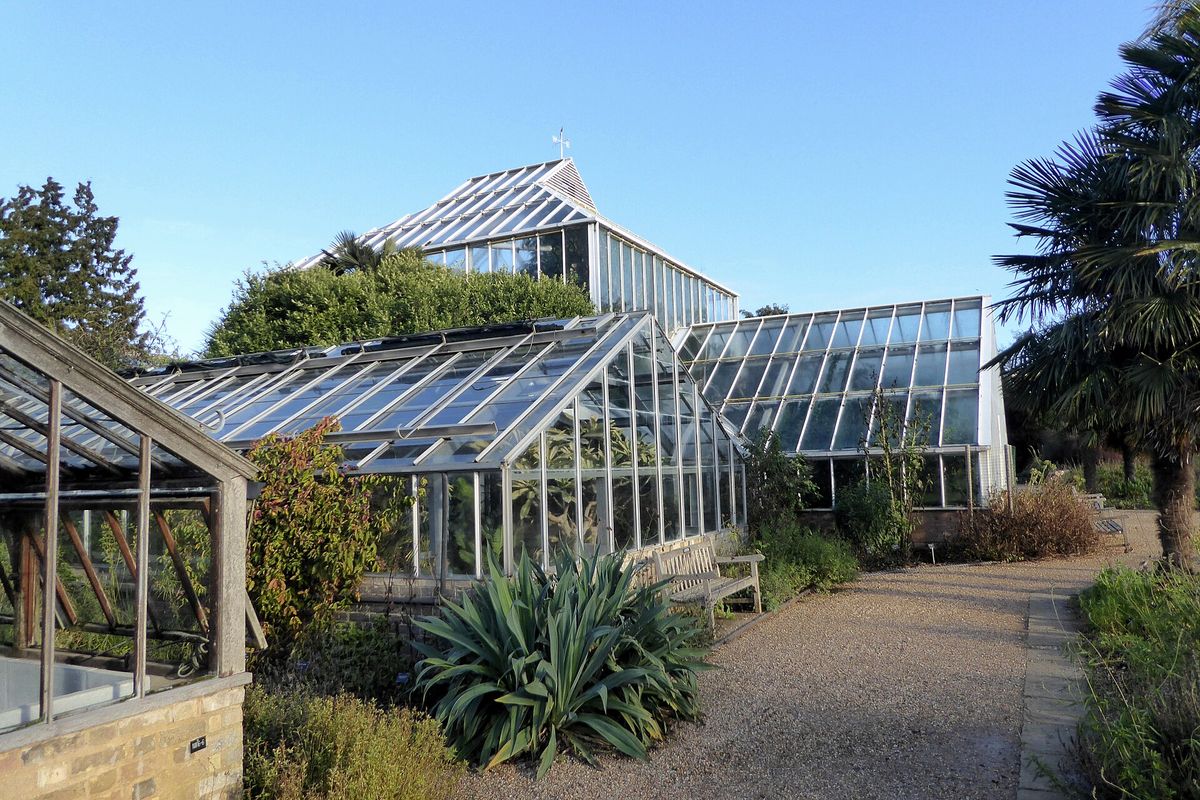
The garden has a claim to fame beyond plants: on 25 July 2019 it recorded 38.7°C, at the time the highest temperature ever measured in the UK. The record was broken in 2022, and on the same day the garden beat its own figure with 39.9°C.
How to visit:
- Entrances: Brookside Gate on Trumpington Road and Station Road Gate on Hills Road. The garden is about 15 minutes' walk from the city centre and 5 minutes from the railway station.
- Opening times: every day except over Christmas. 10am to 6pm from April to September, 10am to 5pm in February, March and October, and 10am to 4pm from November to January.
- Tickets: pay at the ticket office on arrival, or buy in advance online.
The garden is also a member of the University of Cambridge Museums consortium, and its summer evenings host the Sounds Green concerts of Cambridge Summer Music. See our classical music guide.
The Backs
The Backs is the land east of Queen's Road where several colleges back on to the River Cam, with their grounds on both banks. From north to south the core colleges are St John's, Trinity, Trinity Hall, Clare, King's and Queens'. In 2013 the National Trust's chairman, Simon Jenkins, named The Backs among his top ten views in England, and in 1995 English Heritage listed it as a Grade I historic park.
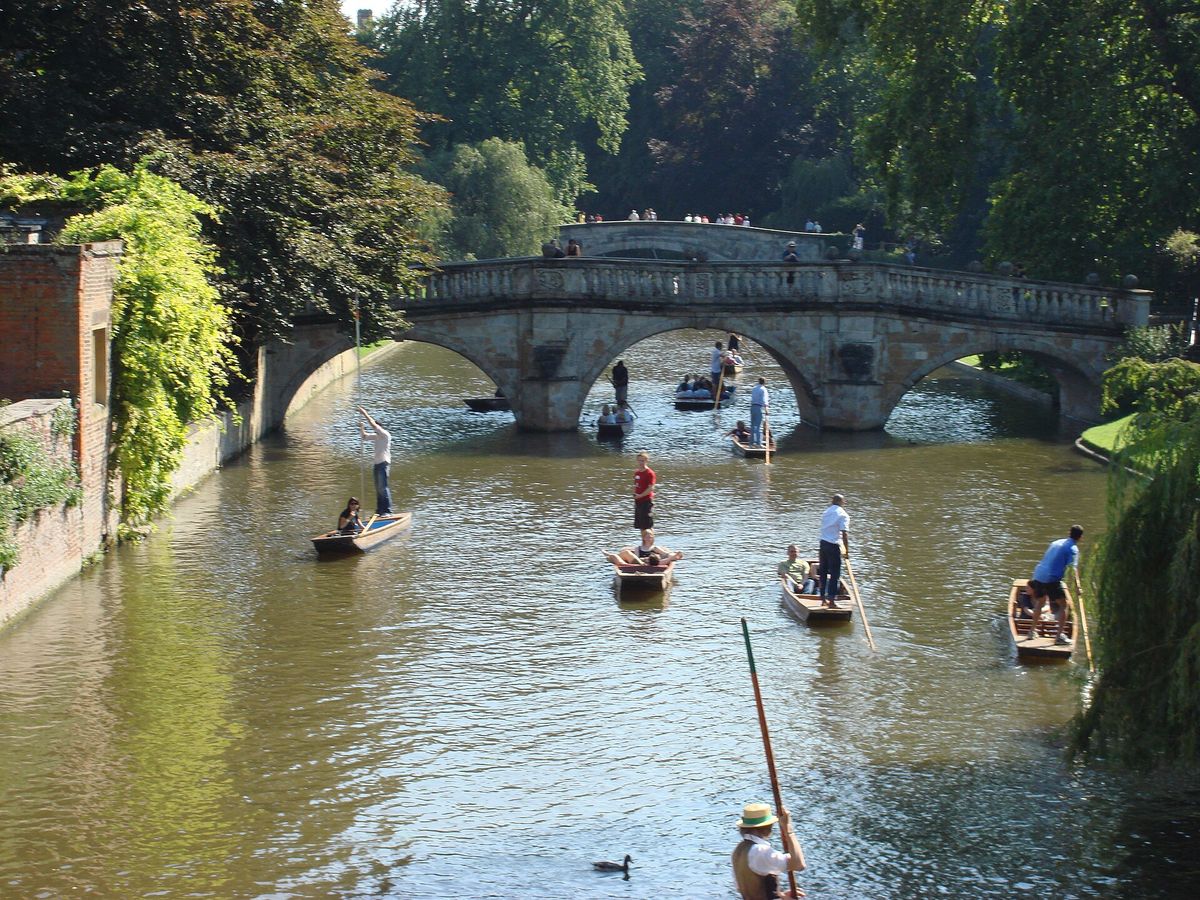
Much of the land was once used by the colleges for grazing or orchards, and cattle can still be found behind King's. Capability Brown drew up a plan in 1779 to turn the whole stretch into country-house parkland focused on King's College, but it was never carried out.
Each college sets its own access to its grounds, so the easiest ways to enjoy The Backs are from Queen's Road, from the bridges, or from a punt. See our A–Z entry on The Backs and on punting.
Jesus Green
Jesus Green is a riverside park on the north side of the city centre. The River Cam runs along its northern edge, Jesus College lies to the south, and Victoria Avenue separates it from Midsummer Common to the east. The two were one open space until Victoria Avenue was built in 1890.
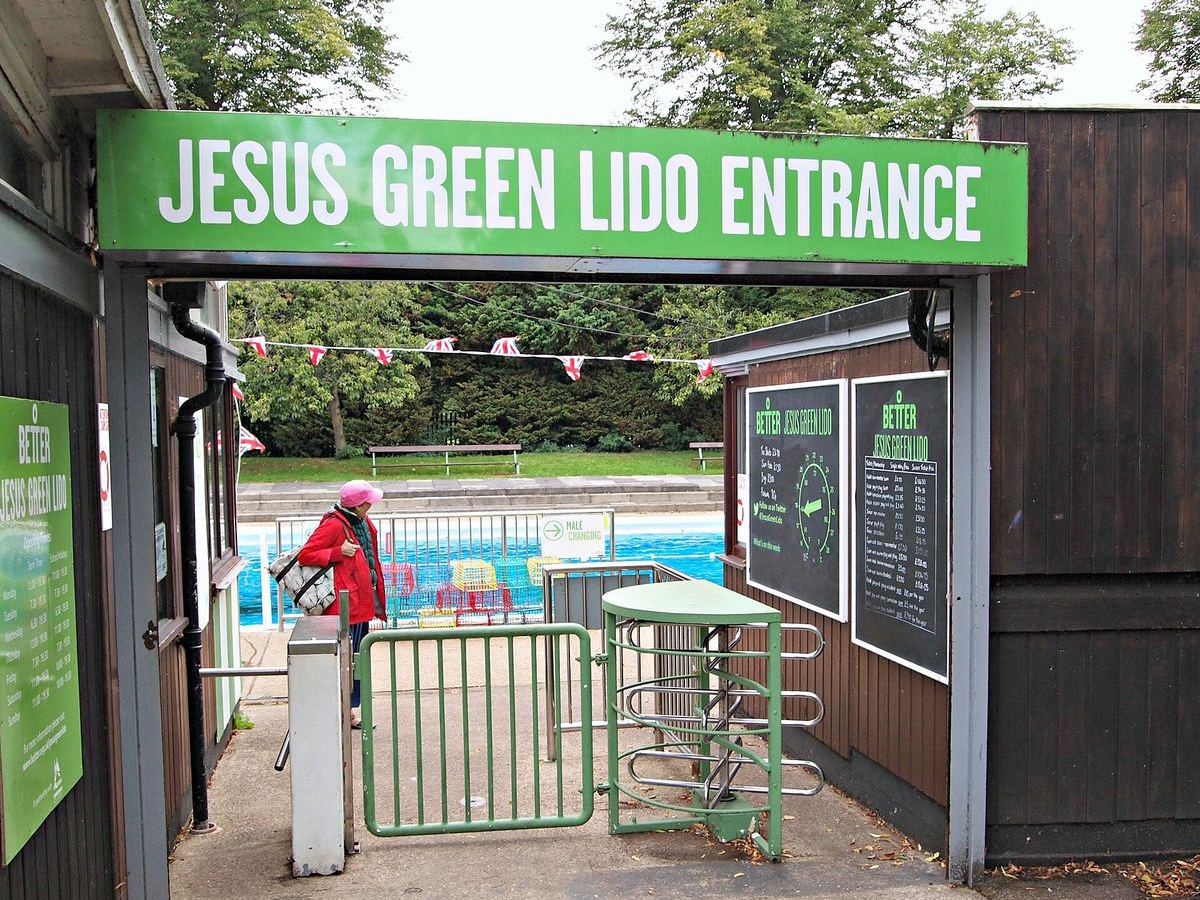
The park's best-known feature is Jesus Green Lido, one of the few surviving lidos built across the country in the 1920s. At 100 yards (91 metres) it is among the longest outdoor swimming pools in Europe. Nearby on the river is Jesus Lock. Upstream of Jesus Green, powered boats are banned from 1 April to 30 September, leaving the river to punts and other manually propelled craft. Jesus Green also hosts the Cambridge Beer Festival every May, as it has since 2001.
Midsummer Common
Midsummer Common is common land on the south bank of the Cam, northeast of the city centre. Houseboats moor along its bank, and the boathouses of most of the colleges line the opposite bank.
It is one of the city's main event spaces. The Midsummer Fair was granted a charter by King John in 1211 and is now a pleasure fair. The common also hosts a May Day fair, Strawberry Fair and fireworks on Guy Fawkes Night, which regularly draw around 25,000 people. Cattle returned to graze the common in 2007 after an absence of several years.
Parker's Piece and Christ's Pieces
Parker's Piece is a flat, roughly square 25-acre green near the centre, crossed by two diagonal paths. The single lamp-post where they meet is known as Reality Checkpoint. It is regarded by some as the birthplace of the rules of association football: the Cambridge University Football Club rules were first used here and were adopted by the Football Association in 1863. The green takes its name from Edward Parker, a Trinity College cook who leased part of the land from 1587. In 1838 a feast for 15,000 guests was held here to celebrate the coronation of Queen Victoria. Today it is used for picnics, football and league cricket. See our A–Z entry on Parker's Piece.
Christ's Pieces is a Victorian park just east of Christ's College, with flower beds, ornamental trees, tennis courts, a bowling green and a memorial garden to Diana, Princess of Wales. The city corporation bought the land from Jesus College in 1886 and laid out the park. It sits next to the main bus station on Drummer Street and is a popular lunch spot in good weather.
Coe Fen and Sheep's Green
South of the centre, the river runs through meadows that feel surprisingly rural for their location. Coe Fen lies on the east side of the Cam, behind Peterhouse, the Fitzwilliam Museum and The Leys School, and Sheep's Green is on the west bank. Together they form a Local Nature Reserve.
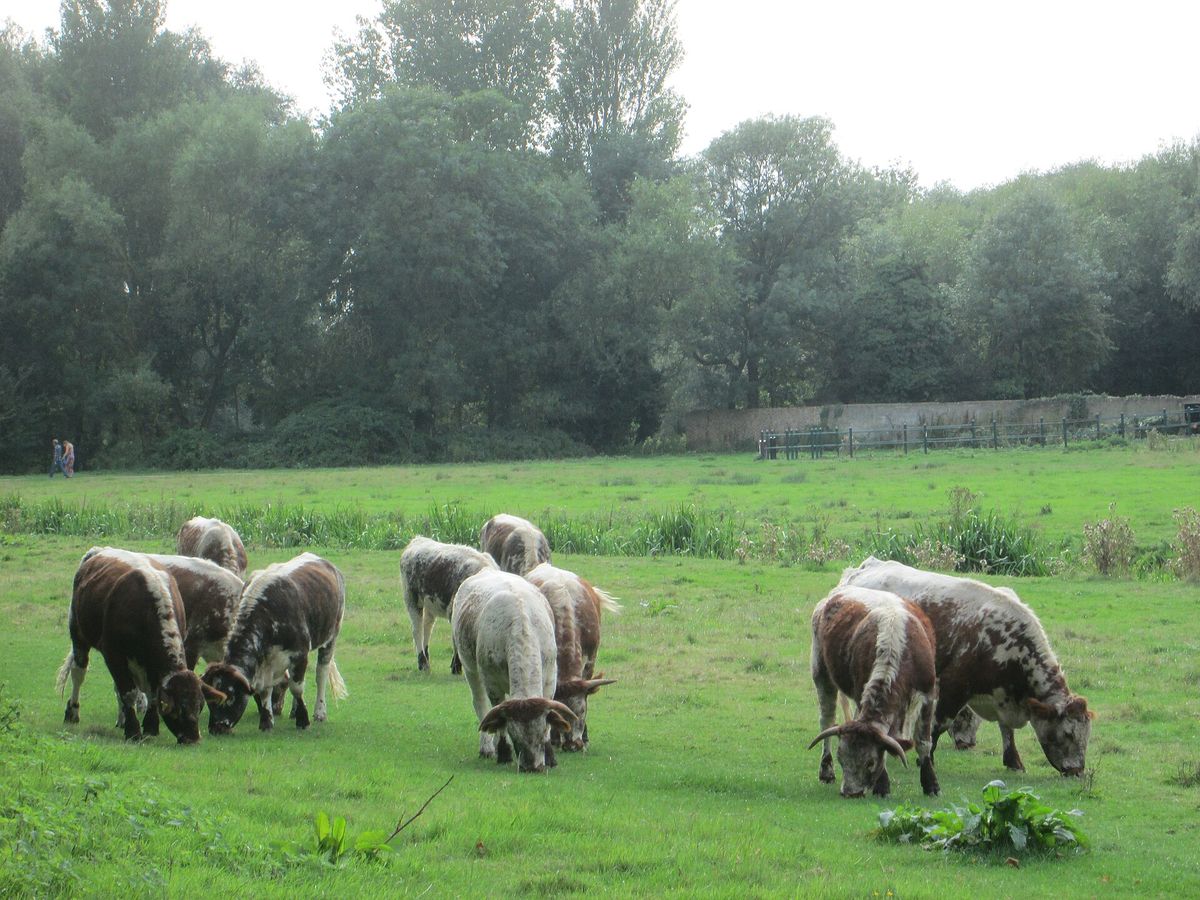
The names reflect the land's old use: the ground between the raised riverbanks flooded easily and was fit only for grazing, cows on Coe Fen and sheep on Sheep's Green. Look for Hodson's Folly near the bridge between the two, a small classical stone shelter built in 1887 by John Hodson, reportedly so he could keep an eye on his daughter when she swam in the river.
Grantchester Meadows and Grantchester
Grantchester Meadows cover 50 acres (20 hectares) on the west bank of the Cam, running from the edge of Cambridge at Newnham Croft to the village of Grantchester. They are owned by King's College and have been managed by Cambridge Past, Present & Future since February 2025. Red Poll cattle graze there from April to October.
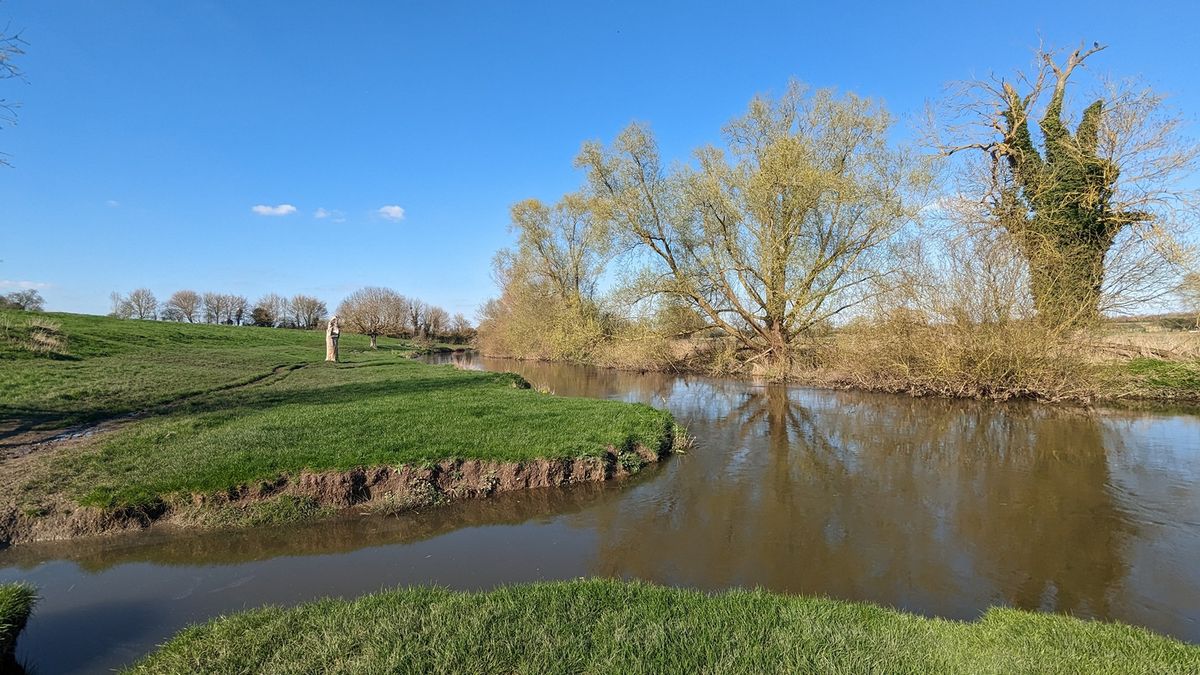
A favourite summer outing is to walk, punt or paddle from the city through the meadows to the pubs in Grantchester, about two miles south of Cambridge. In the village, The Orchard has served tea under its apple trees since 1897, when Cambridge students persuaded the owner of Orchard House to serve them there. The poet Rupert Brooke lodged at Orchard House and later moved next door to the Old Vicarage, subject of his 1912 poem The Old Vicarage, Grantchester.
A note on swimming: the Cam at Grantchester Meadows has been used for swimming for over 500 years, Virginia Woolf and Rupert Brooke among the swimmers. In June 2021 King's College put up signs prohibiting swimming from the meadows on safety grounds, a decision that proved controversial. Check the current position before you go in.
Wandlebury Country Park
Wandlebury Country Park sits on top of the Gog Magog Hills southeast of Cambridge. It covers 150 acres of woods, meadows and views, with an Iron Age hill fort, an 18th-century country estate, a walled garden, an orchard and ponds.
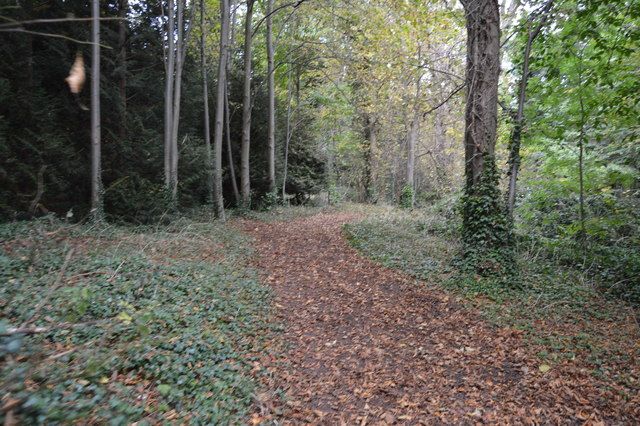
The hill fort, known as Wandlebury Ring, was first built in about 400 BC, with a second ditch and bank added in the 1st century BC. In 1685 a house, garden and racing stables were built inside it for King James II, levelling the inner rampart. The house was demolished in 1956, but the stable block remains. The local charity Cambridge Past, Present & Future saved the site from development in 1954 and still owns and runs it.
How to visit:
- Opening: every day of the year, from dawn to dusk. Entry is free.
- Parking: charged, £3.50 on weekdays and £4.39 at weekends and bank holidays, free for members of the charity.
- Dogs are welcome on leads, with a fenced dog run. Cycling is not allowed in the park, except for young children.
One more: Cherry Hinton Hall
Cherry Hinton Hall, south of Cambridge, is a Victorian house and park owned by Cambridge City Council. The house was built in 1839 for John Okes, a surgeon at Addenbrooke's Hospital, who laid out the gardens and lake. The park is popular with families in summer and is home to the annual Cambridge Folk Festival.
Planning your visit
- Best for a first visit: the Botanic Garden, 5 minutes from the station, and The Backs, close to the city centre.
- Best for a long walk: Coe Fen and Sheep's Green, then along the river through Grantchester Meadows to Grantchester.
- Best for a swim: Jesus Green Lido.
- Best for history outdoors: Wandlebury Ring, and Parker's Piece for the story of football's rules.
Frequently asked questions
Is Cambridge Botanic Garden free?
No. The Botanic Garden charges for entry. You can pay at the ticket office on arrival or buy tickets in advance online. It is open every day except over Christmas.
Where can you swim outdoors in Cambridge?
Jesus Green Lido, a 1920s outdoor pool on the edge of Jesus Green, is among the longest outdoor swimming pools in Europe at 91 metres. River swimming at Grantchester Meadows has a long history, but King's College put up signs prohibiting swimming there in 2021.
Why do cows graze in the middle of Cambridge?
Several of the city's green spaces are old common land or meadows that were used for grazing for centuries. Cattle still graze on Coe Fen, Midsummer Common and Grantchester Meadows, and behind King's College on The Backs.
What is Reality Checkpoint?
It is the name given to the single lamp-post where the two diagonal paths cross Parker's Piece, near the city centre.
Is Wandlebury free to visit?
Yes. Wandlebury Country Park is free to enter and open every day from dawn to dusk. Car parking is charged, except for members of Cambridge Past, Present & Future.
Glossary
Cambridge terms used in this article. Each links to its entry in our Cambridge A–Z.
- College
- One of 31 self-governing communities that make up the collegiate University alongside its faculties and departments.
- The Backs
- The river frontage where several Colleges back onto the Cam, with lawns, gardens and bridges along the water.
- Punt and punting
- A flat-bottomed boat pushed along the River Cam with a long pole, and the leisure trip taken in it.
- Parker's Piece
- A large open common in central Cambridge, used for games and events, where the Cambridge University Football Club laws were first used.
- Cambridge Biomedical Campus
- The hospital and medical research site on the southern edge of Cambridge, home to Addenbrooke's, the Rosie and Royal Papworth hospitals, research institutes and companies.
Sources
- en.wikipedia.org/wiki/Cambridge_University_Botanic_Garden
- botanic.cam.ac.uk/visit-us/
- en.wikipedia.org/wiki/The_Backs
- en.wikipedia.org/wiki/Jesus_Green
- en.wikipedia.org/wiki/Midsummer_Common
- en.wikipedia.org/wiki/Parker%27s_Piece
- en.wikipedia.org/wiki/Christ%27s_Pieces
- en.wikipedia.org/wiki/Coe_Fen
- en.wikipedia.org/wiki/Grantchester_Meadows
- en.wikipedia.org/wiki/Grantchester
- en.wikipedia.org/wiki/Wandlebury_Hill_Fort
- cambridgeppf.org/wandlebury-country-park
- en.wikipedia.org/wiki/Cherry_Hinton_Hall
This is an independent member's guide compiled by Cambridge Society. We are not affiliated with the venues and institutions mentioned; opening arrangements change, so always confirm details on the official websites before making plans.
← Back to Articles