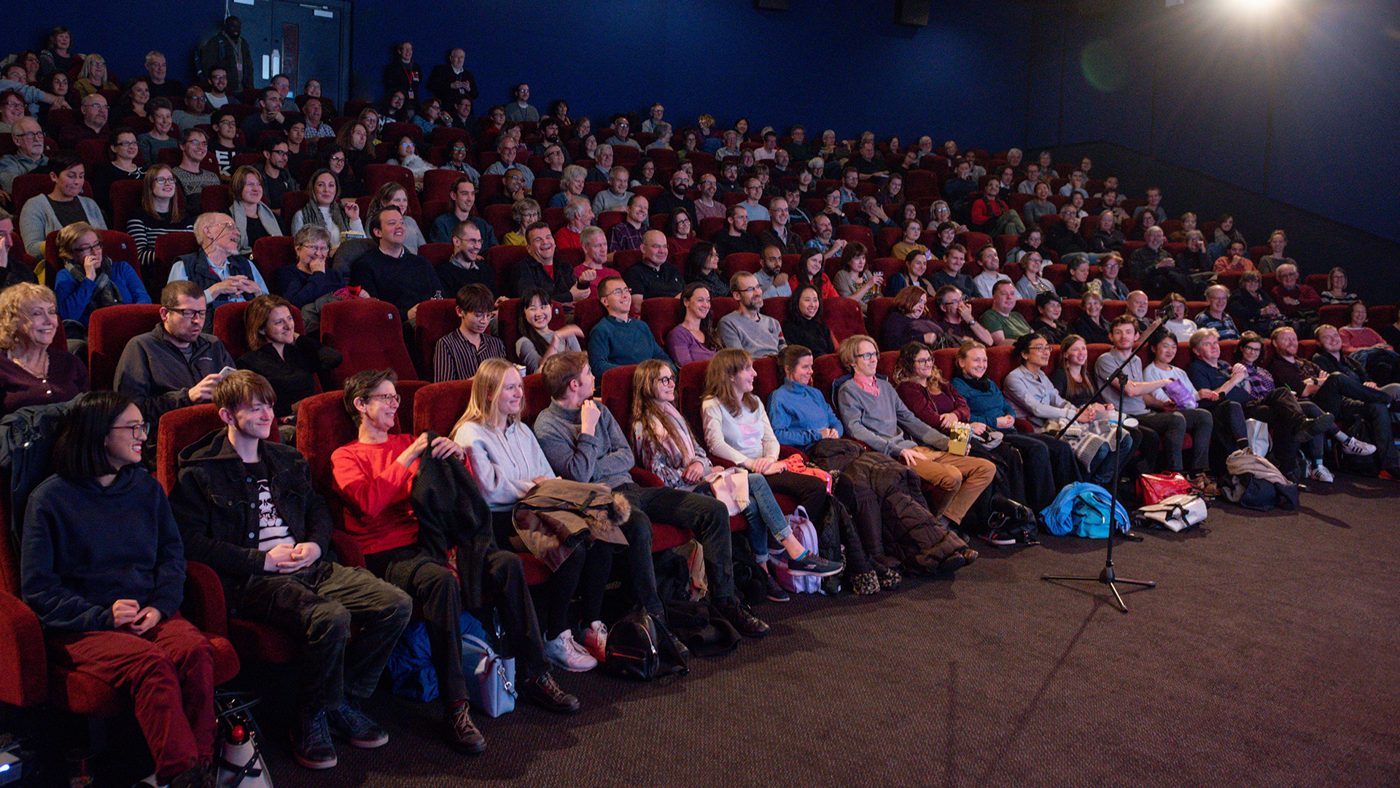
The 2026 festival at a glance
The 45th Cambridge Film Festival runs from Thursday 22 October to Sunday 1 November 2026. Screenings take place at the Cambridge Arts Picturehouse on St Andrew's Street and at other venues in the city. The festival is organised by the Cambridge Film Trust, a registered charity (no. 1120059), with the BFI as its main funder.
According to the organisers, the 2026 programme brings together nearly 100 titles from more than 25 countries. It includes Palme d'Or and Cannes prize-winners, new British films, documentaries and films for younger audiences. More than half of the line-up is directed by women; these films carry the festival's F-Rating mark.
"Forty-five years is a huge milestone." - Owen Baker, Cambridge Film Festival
The full programme was published on 30 September on the festival website, where tickets are booked too. The festival opens on Thursday 22 October at 8.20pm with I See Buildings Fall Like Lightning. The published strands include Gala Screenings, International Festival Highlights, Cambridge Connections, Short Fusion, a Family Film Festival, Reframe, a Surprise Film and a CFF 45th Birthday strand, and the festival has announced a 35th-anniversary screening of Thelma & Louise (programme checked 3 October 2026). The Cambridge Film Festival is a BAFTA- and BIFA-qualifying event, so the short and feature films shown here can become eligible for the British film industry's main awards.
Where the films are shown
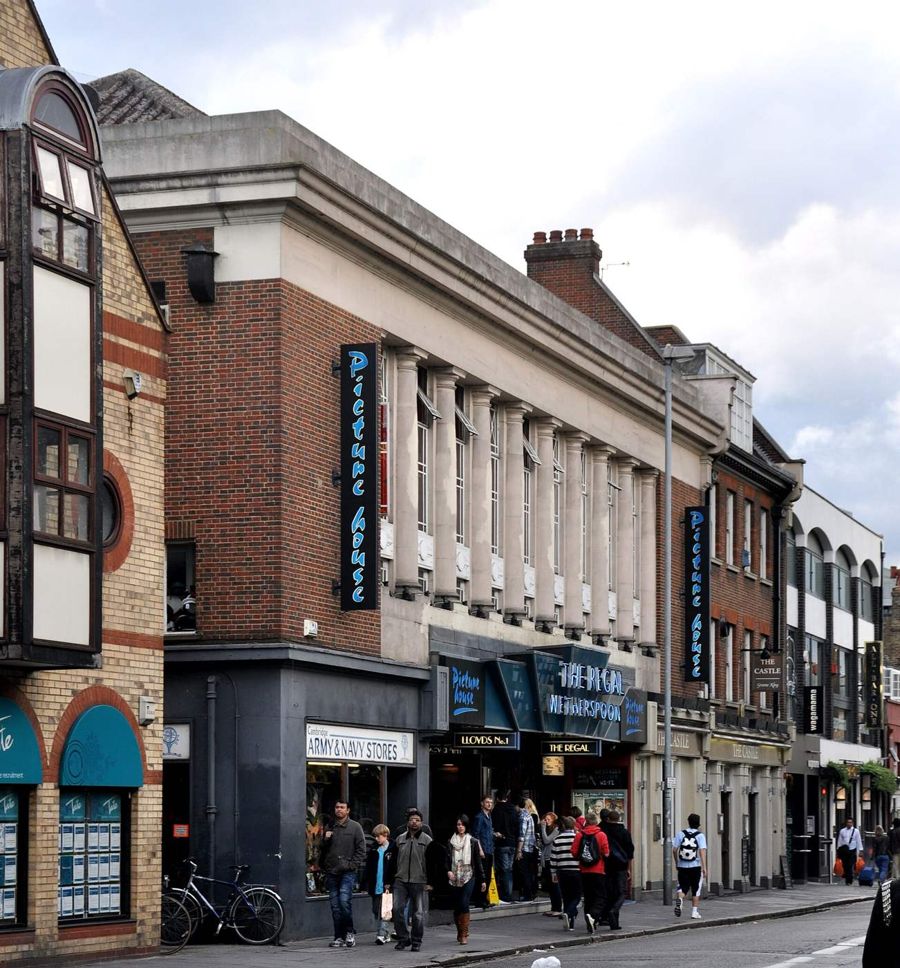
The festival's home is the Arts Picturehouse, the city's arts cinema, which occupies the upper floors of the former Regal cinema, built in 1937. The festival began in 1977 at the old Arts Cinema in Market Passage and later moved here.
Over the years the festival has also used other venues: the Light Cinema, the arts centre The Junction, Sawston Cinema, local churches and pedestrianised streets. Until 2019 it held open-air "Movies on the Meadows" screenings on inflatable screens at Grantchester Meadows. Venues beyond the Arts Picturehouse change from year to year, so check each screening's location when you book.
What to expect
- Premieres. UK premieres alongside films fresh from Cannes, Berlin and other major festivals. The audience awards go only to films having their UK premiere here.
- Filmmaker Q&As after selected screenings, plus talks and special presentations.
- Family films. In 2025 the festival ran free family screenings during October half-term. The 2026 programme again promises films for younger audiences.
- Local connections. In 2025 a "Cambridge Connections" strand showed films with local ties, including Lost for Words, shot in Ely.
- Industry and education. The festival hosts an Industry Day with Anglia Ruskin University and runs year-round schemes for young people (see below).
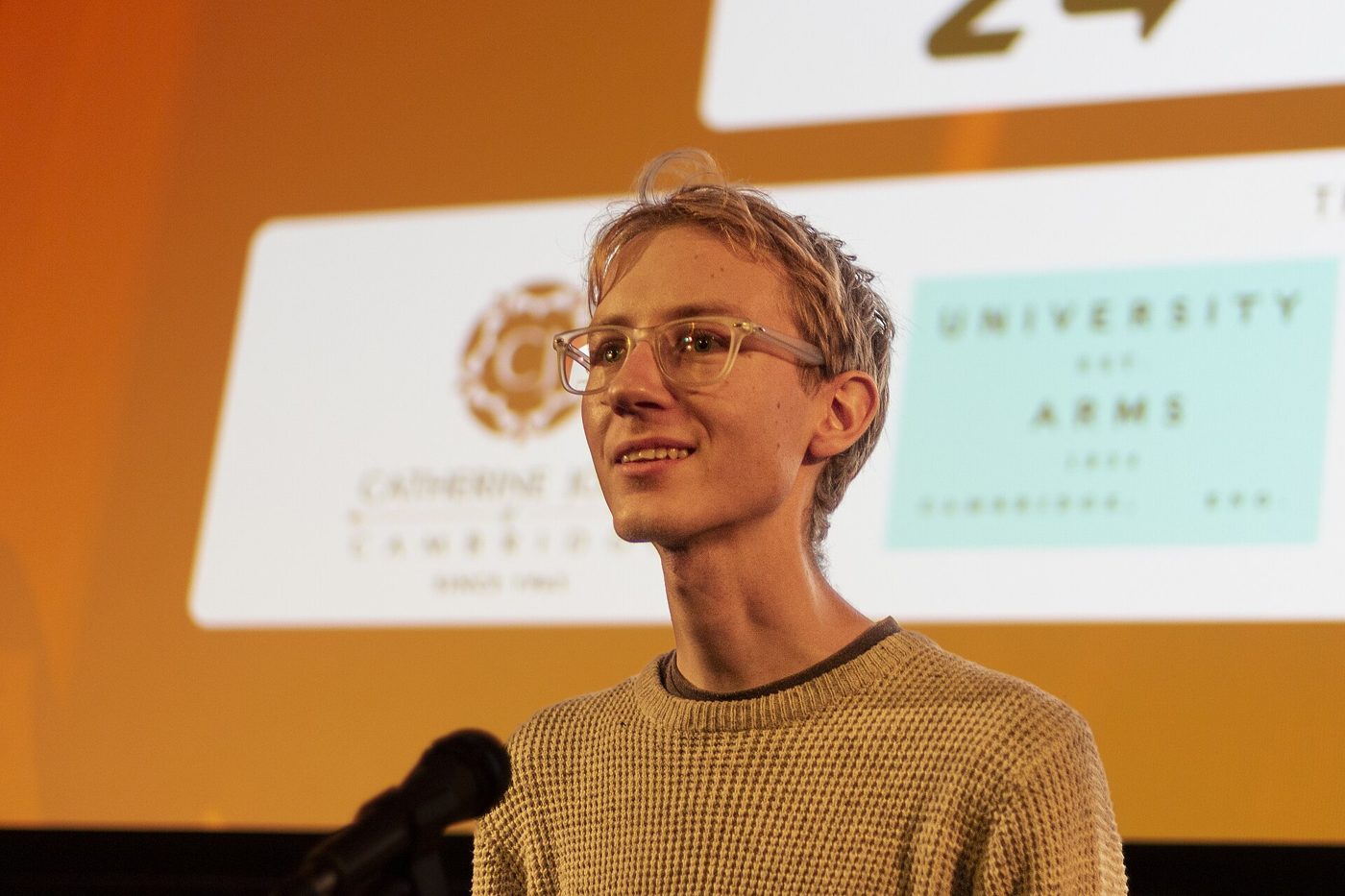
Last year: the 2025 festival
The 44th festival (23 October – 2 November 2025) was its longest run to date: eleven days across two weekends, a format last used in 2015. It presented more than 100 titles from 25 countries, including 30 UK premieres. It opened with Bugonia, Yorgos Lanthimos's film with Emma Stone and Jesse Plemons, and included a live event with the film critic Mark Kermode.
| 2025 award | Winner |
|---|---|
| Golden Punt Jury Award (Best Discovery Feature) | Sleepless City (Ciudad sin sueño), Guillermo Galoe |
| Audience Award, Best Fiction Feature | Beautiful Evening, Beautiful Day, Ivona Juka |
| Audience Award, Best Documentary Feature | Shades of Survival, David Ayeni |
| Audience Award, Best Short Film | Monsters, Andy Field & Beckie Darlington |
| Youth Lab Jury Award | The Fisherman, Zoey Martinson |
The festival also presents an Outstanding Contribution to Cinema Award. Recent recipients include Emma Thompson (2022), Asif Kapadia (2023) and Daniel Kaluuya.
Almost half a century of cinema in Cambridge
The festival was founded in 1977 at the Arts Cinema in Market Passage. Its first programme included Akira Kurosawa's Dodes'ka-den and Luchino Visconti's Conversation Piece. A year later a Satyajit Ray retrospective began the festival's tradition of retrospective strands. The festival originally took place in early July and has since moved to the autumn.
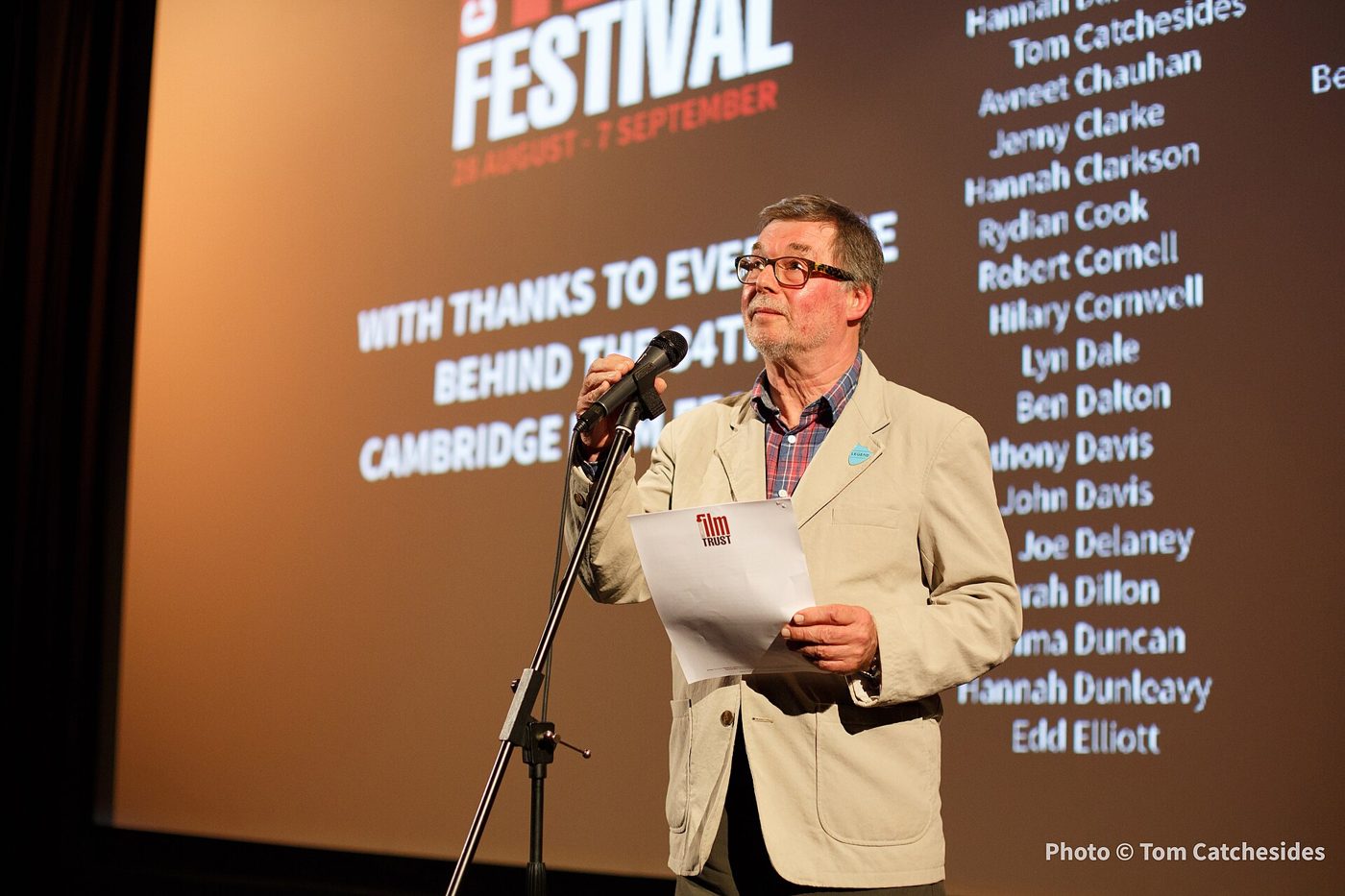
For almost four decades the festival was shaped by Tony Jones, its director from 1981 to 2019. When he stepped down, he received the first CFF Outstanding Contribution to Cinema Award. Since then the programme has been selected by a programming panel. After the 20th festival in 1996 there was a break of several years; the festival returned in 2001 as the 21st edition. That break is why the 2026 festival is the 45th, although it is almost fifty years since the first one.
Cambridge audiences have often seen important films here before the rest of the country:
- 1992: UK premieres of Reservoir Dogs and The Best Intentions;
- 1994: the Three Colours trilogy, with the first full Kieślowski retrospective;
- 2003: around 50 UK premieres, including Spirited Away;
- 2013: the UK premiere of Woody Allen's Blue Jasmine.
Guests over the years have included Wim Wenders (1984), Cate Blanchett (2003), Julie Delpy (2004), Terry Gilliam (2006 and 2018), Ken Loach (2019) and Peter Greenaway, who has visited several times.
Taking part beyond the audience
For young people and new critics
- CFF Youth Lab, for 16–24-year-olds: film discussion groups, workshops, talks from industry professionals and career support. Members also award the Youth Lab Jury Award.
- CFF Reel Voices, run with Anglia Ruskin University: mentoring for emerging film journalists and critics. Participants get early access to festival screenings and publish their reviews.
- First Steps: volunteering, mentoring and internships, aimed especially at young people from disadvantaged and minoritised backgrounds.
- CFF Industry Day: workshops, panels and discussions for filmmakers, students and professionals.
For filmmakers
Submissions go through FilmFreeway. Features must be at least 60 minutes and shorts under 30. Films must be completed within 18 months of the festival and must not have been released in the UK. Entry is free for Cambridgeshire-based filmmakers, and all selected filmmakers for 2026 are contacted by 16 September 2026.
What critics say
"It is small enough for a first or second feature to be noticed, and its status is high enough for a selection to count."
Maria Bregman has covered the festival for Creativity's UK. In her working guide to the 2026 edition she calls it "one of the more accessible professional doors in British film" for people who make and write about films. Reporting on the 42nd festival in 2023, she put the case for it in one line:
"Cambridge is not London, and that is its strength."
The cultural magazine DIVO.TV looks at the money behind the programme, noting that the Cambridge Film Trust covers about a third of its budget from businesses, donors and Friends of the Festival:
"A 45-year record like this is the real asset of a festival."
Why we highlight it
The festival anchors our Arts & Culture interest area. For members and their families it is a highlight of the autumn: international cinema without a trip to London, filmmakers in the room, and a programme that makes room for local stories. Our tips:
- Look through the programme, published on 30 September. Q&A screenings and premieres sell out first.
- If you have children, keep an eye on the family screenings in the half-term week.
- If you know a young person interested in film or film criticism, the Youth Lab and Reel Voices are a good way in.
More in the city's calendar: the Cambridge Festival of ideas and research, and Cambridge Wide Open Week. To meet other members, join our Saturday meetup.
Sources (checked 11 September 2026):
- Cambridge Film Festival: dates, history, awards, submissions, education programmes
- Wisbech Standard: 2026 programme announcement
- East Anglia Bylines: the 2025 festival
- Wikipedia: venues and outdoor screenings
- Creativity's UK: a working guide for filmmakers and film writers, by Maria Bregman
- Creativity's UK: report from the 42nd festival (2023)
- DIVO.TV: what a film festival is worth, the economics behind Cambridge at 45
- ArtCulture: discovery, retrospective and the end of the one-director festival
- VisionaryArt: a visitor's guide to eleven days of cinema outside London
- The UniBlog Journal: how to cover the festival as a creator